
Key findings
- The Community Wealth Fund (CWF) will direct £175 million to selected English neighbourhoods, with £1 million to £2.5 million available over ten years alongside capacity and capability support. Its allocated, rather than competitive, model is designed to reach places with high deprivation and weaker social capital and social infrastructure (Departme
- Removing a minimum threshold for existing social infrastructure improves reach, but it also makes early investment in local capability integral to delivery rather than a preparatory administrative task (Department for Culture, Media and Sport and Ministry of Housing, Communities and Local Government, 2025) [[dcmsmhclg2025cwf]].
- Evidence supports social infrastructure as a condition that can enable better social, civic, health and economic outcomes, not as a stand-alone solution. Spaces create value when they are accessible, inclusive and actively animated by people and organisations that enable interaction (Department for Digital, Culture, Media and Sport and Department f
- The fund should assess its early progress through institutional leading indicators: representative participation, trusted local governance, partnership quality, test-and-learn capacity and credible stewardship arrangements. Asset delivery and short-term outcome counts are too blunt on their own.
- Community-led activity can improve the local fit and durability of investment, including support for enterprise and underused high-street spaces. It cannot substitute for statutory services or resolve structural economic pressures beyond a neighbourhood fund’s scope.
The innovation is not participation alone; it is funding the ability to participate
England’s Community Wealth Fund is a significant test of how place-based investment is designed. It combines £87.5 million from dormant assets with £87.5 million in National Lottery funding, and is intended to provide selected neighbourhoods with £1 million to £2.5 million over ten years, alongside capacity and capability support. It targets neighbourhoods with relatively high deprivation and low social capital and social infrastructure, generally at a scale of 5,000 to 15,000 residents rather than local-authority boundaries (Department for Culture, Media and Sport and Ministry of Housing, Communities and Local Government, 2025) ↗.
Its most important departure from conventional regeneration funding is procedural. Communities are not expected to win a standard competitive bidding round; eligible places will be identified and residents are intended to hold substantial autonomy over priorities. This matters because competitive processes tend to favour places already able to write persuasive applications, navigate funder requirements, convene partners and absorb delivery risk—the very capabilities that the CWF is intended to strengthen (Department for Culture, Media and Sport and Ministry of Housing, Communities and Local Government, 2025) ↗.
The central question is therefore not simply whether residents are consulted. It is whether public-purpose finance can help residents and local organisations establish durable arrangements to identify problems, make trade-offs, manage resources and sustain action. That is a more demanding proposition than commissioning a project plan.
Sanctuary’s judgement is that the fund should be treated primarily as an operating-model test. Money alone does not generate trust, accountable governance, practical coordination or organisations able to manage a building, an enterprise or a service. If capacity building is reduced to a short induction before capital is released, the CWF could recreate the capability gap its allocation model is meant to overcome. The implementation choices made before major spending begins will determine whether resident autonomy is meaningful or merely nominal.
Social infrastructure works through relationships, not premises alone
The evidence for social infrastructure is encouraging but should be read with discipline. A government rapid evidence review found that community infrastructure is necessary but insufficient for thriving communities. It reported strong evidence that spaces are more effective when they facilitate interaction and are supported by organisers or institutions, and medium evidence linking effective infrastructure and social capital to economic, health, social and civic benefits. It also cautioned that local context matters and that the contribution of a single intervention cannot reliably be isolated (Department for Digital, Culture, Media and Sport and Department for Levelling Up, Housing and Communities, 2023) ↗.
That distinction has direct implications for CWF spending. A hall, library room, park, market unit or vacant shop does not become useful social infrastructure simply by being acquired or refurbished. It must be affordable, reachable, safe and welcoming; it must also be programmed and governed in ways that enable people to meet beyond established networks. The review warns that places can inhibit bridging social capital where users feel excluded, unsafe or that a venue is controlled by one group (Department for Digital, Culture, Media and Sport and Department for Levelling Up, Housing and Communities, 2023) ↗.
An asset-led model should therefore be an option, not an implicit test of ambition. Community ownership may create a platform for local enterprise, income and collective control. Equally, it can transfer maintenance liabilities, governance burdens and cash-flow exposure to small organisations. In some neighbourhoods, better use of existing venues, a shared organiser, participatory micro-grants, youth-led activity, transport to local opportunities or support for a community enterprise may deliver more value than acquiring a building.
The final evaluation of the Know Your Neighbourhood Fund reinforces this caution. It found that familiar, accessible spaces helped activities become embedded locally and reported positive contributions to volunteering, community ties, wellbeing and local pride. Yet it found no statistical evidence that the fund reduced chronic loneliness (Department for Culture, Media and Sport, 2026) ↗. The lesson is not that participation lacks value. It is that connection is an important intermediate outcome, while entrenched social challenges are multi-causal and unlikely to shift through isolated activity alone.
Breadth is defensible, but it narrows the margin for delivery error
The CWF has made a clear reach-versus-intensity choice. Consultation responses recognised the appeal of supporting more communities, while others argued that larger awards to fewer places would be more likely to establish durable partnerships and secure lasting change. Government chose awards of £1 million to £2.5 million per community over ten years, with separate capacity support, partly to generate learning across different local settings (Department for Culture, Media and Sport and Ministry of Housing, Communities and Local Government, 2025) ↗.
There is no technical formula that resolves this trade-off. At the lower end, £1 million over a decade averages £100,000 a year before accounting for the sequencing of investment, inflation, accessible participation, facilitation, governance, safeguarding, evaluation and specialist advice. This is meaningful patient capital for a neighbourhood-scale portfolio. It is not enough to replace mainstream public services, resolve weak labour demand or fund major physical renewal.
That constraint should sharpen, rather than diminish, the fund’s purpose. The CWF is well placed to support the connective functions that conventional commissioning often neglects: trusted convening, locally accessible participation, small-scale experimentation, partnership brokering, local intelligence, enterprise development and stewardship of shared assets. These can improve the usefulness of other investment without being easily purchased through a standard service contract.
The counterargument is important. Community action must not become a low-cost substitute for adequate housing, health, transport, local-government services or employment support. The fund’s additionality principle is intended to prevent dormant-assets money from replacing activity that government departments should fund (Department for Culture, Media and Sport and Ministry of Housing, Communities and Local Government, 2025) ↗. Delivery arrangements should make that principle operational: when residents identify failures requiring statutory or strategic action, there should be a clear escalation route rather than pressure to solve them with the neighbourhood allocation.
Make ‘year zero’ a paid phase with practical outputs
Government’s proposed inception phase recognises that communities will begin with different levels of readiness. Places are expected to map existing social infrastructure and build from local strengths, and some may need longer before drawing down substantial funding (Department for Culture, Media and Sport and Ministry of Housing, Communities and Local Government, 2025) ↗. This is the right direction, but it needs protection from becoming a planning exercise detached from delivery.
Sanctuary recommends a funded, time-bound ‘year zero’ focused on building a local operating system. First, mapping should cover people as well as premises: informal networks, tenant and resident groups, faith organisations, schools, small firms, youth networks and voluntary organisations. It should also identify who is missing from decisions, why, and what participation costs in travel, time, caring responsibilities, language, confidence or accessibility.
Second, each place should agree clear decision rules before committing significant capital. These should cover conflicts of interest, delegated authority, spending thresholds, safeguarding, accessibility, complaints and the treatment of minority views. Resident autonomy without transparent rules can concentrate influence among the most confident, connected or available participants.
Third, the fund should resource a locally legitimate convening function. The scarce resource is frequently not ideas but a person or team able to translate between residents, councils, funders, landowners, service providers and prospective social entrepreneurs. That function needs enough independence to retain trust, but also access to financial, legal and operational expertise.
Fourth, communities should undertake small, reversible tests before taking on long-lived commitments. Micro-grants, temporary use of empty premises, pilot trading, events and pop-up activity can reveal demand, test governance and build confidence. This is also where participation can create practical pathways into enterprise, employability and management capability: residents gain experience of budgeting, procurement, governance, customer insight and delivery.
Finally, every durable commitment should have a stewardship plan. For an asset, that means maintenance, insurance, management, use, income and succession. For an enterprise, it means a viable operating model rather than an assumption that social value will cover recurrent costs. For a service, it means workforce, safeguarding, referral routes, data and post-grant partnerships. The pertinent question is not only whether residents choose an intervention, but who will make it work on an ordinary Tuesday three years later.
Measure institutional progress before claiming transformation
The government response envisages an initial independent evaluation in 2029, followed by further evaluation at four-year intervals (Department for Culture, Media and Sport and Ministry of Housing, Communities and Local Government, 2025) ↗. Independent evaluation is necessary, but it is not a substitute for earlier learning. A programme working in varied neighbourhoods needs feedback that can alter delivery while choices remain reversible.
Sanctuary recommends two levels of measurement. Programme-wide indicators should permit comparison and collective learning; neighbourhoods should then select a small number of outcomes that residents judge meaningful. Neither level should treat an observed change as proof that the fund alone caused it.
For the first 18 to 24 months, leading indicators should carry greater weight than asset delivery or footfall. Useful measures include the diversity and retention of participants; accessibility of meeting times and venues; confidence in local decision-making; the quality of cross-sector partnerships; the speed at which small ideas can be tested; the share of spending that strengthens local delivery capability; and the proportion of enduring commitments with credible stewardship or income arrangements.
Later, places can track locally relevant outcomes such as volunteering, use of community spaces, neighbourhood belonging, participation in learning, access to support or local trading activity. The Know Your Neighbourhood findings show why sequencing matters: positive volunteering and community-connection outcomes did not automatically produce a measurable fall in chronic loneliness (Department for Culture, Media and Sport, 2026) ↗.
The appropriate test of sustainability is not financial self-sufficiency. Many socially valuable activities will continue to require subsidy. A stronger CWF legacy would be a neighbourhood with better local governance, more capable organisations, stronger links to mainstream systems and, where appropriate, viable community or SME-facing enterprise activity that brings underused spaces back into productive use. That is a credible contribution to local economic value. It is also a more realistic standard than expecting a £1 million to £2.5 million allocation to transform every condition shaping a place’s prospects.
Research foundation
References
- Department for Culture, Media and Sport; Ministry of Housing, Communities and Local Government (2025). Government response to the technical consultation on the design of a Community Wealth Fund in England. GOV.UK.Source ↗
- Department for Digital, Culture, Media and Sport; Department for Levelling Up, Housing and Communities (2023). Rapid evidence review of community initiatives. GOV.UK.Source ↗
- Department for Culture, Media and Sport (2026). Final overarching evaluation of the Know Your Neighbourhood Fund. GOV.UK.Source ↗
- Department for Culture, Media and Sport (2025). Local Civil Society Infrastructure (LCSI) R&D Programme: Final reports. GOV.UK.Source ↗
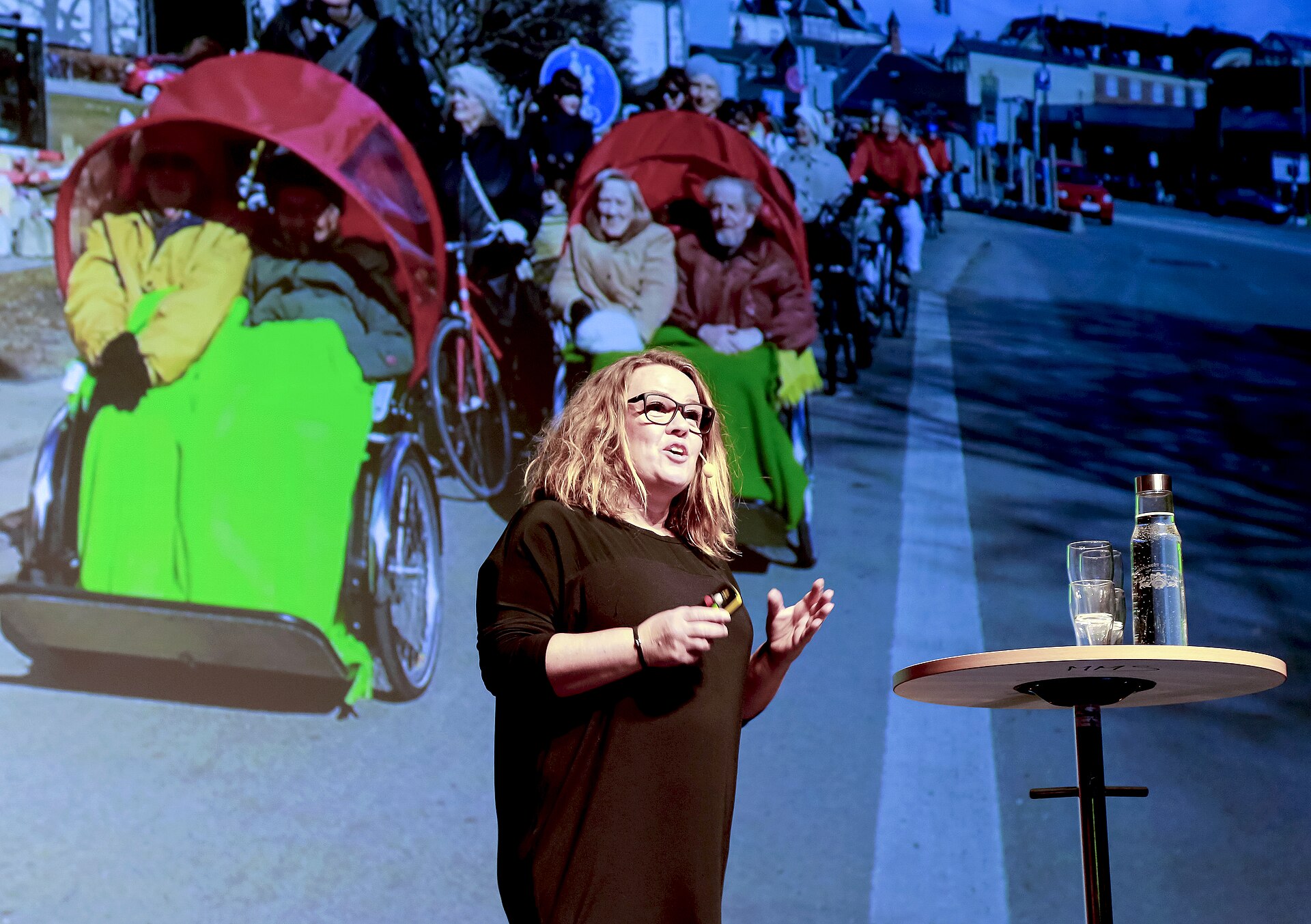
- News Oresund. Hero image: 20171114 Social Innovation Summit Dorthe Pedersen (38417857381).jpg. Wikimedia Commons · CC BY 2.0.Image source ↗
Related Sanctuary capabilities
From analysis to implementation.
Discussion
No approved comments yet.