
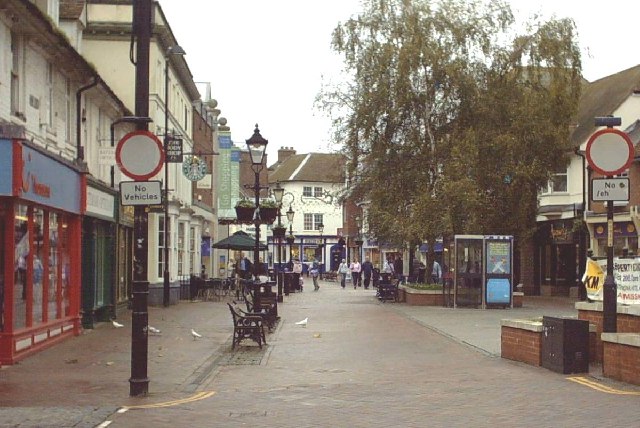
Key findings
- Pride in Place moves from planning towards delivery in 2027. The critical distinction will be between places that combine capital projects with an operating model and those that treat construction as the final outcome.
- The Towns Fund evaluation gives qualified grounds for confidence: Future High Streets Fund towns recorded stronger relative footfall recovery than comparable towns. It does not establish that physical investment alone creates durable business growth.
- Footfall remains an important demand signal, but it is not a sufficient measure of local economic value. Retail demand is fragmented across physical and online channels, while town centres increasingly depend on services, community use and evening activity as well as shopping.
- The leading management question is conversion: whether improved access and visits produce longer dwell time, viable occupiers, local supplier spend, enterprise survival and inclusive use.
- Programme monitoring should be used as a live management tool. Places need baselines, named owners for long-term stewardship and clear triggers for changing course when activity does not convert into sustained local value.
The thesis: regeneration now has to prove its operating model
England’s town centres are entering a consequential delivery period. The Pride in Place Programme provides up to £5.8 billion over ten years across 284 communities. For Phase 2 places, the immediate task is to translate a ten-year vision and four-year investment plan into an agreed, deliverable programme. Plans are due by 30 November 2026, with provision for some places to submit by 26 February 2027; programme-delivery funding for 2027–28 follows agreement of a memorandum of understanding (MHCLG, 2026) ↗ ↗.
That timetable matters because it shifts the practical question. The issue is no longer simply whether capital can be assembled for high streets, public spaces and vacant buildings. It is whether local authorities, boards, property owners and delivery partners have enough management capacity to convert those assets into sustained activity.
Sanctuary’s judgement is that the 2027–29 period will divide places less by the scale of their capital schemes than by the quality of their operating model. Stronger places will connect physical works to occupier brokerage, accessible transport, meanwhile use, events, trader support, maintenance and local data. Weaker places may still deliver attractive projects, but will struggle where nobody has the authority, revenue or incentives to curate uses, resolve property barriers and adapt the offer after completion.
This is not an argument that footfall no longer matters. Shops, cafés, services and cultural venues require demand. It is an argument that footfall is an intermediate measure, not the final test. A busy event day can coexist with persistent vacancies; a centre with fewer conventional shopping trips may nevertheless be more economically useful if it supports services, independent firms, community facilities and activity across more of the day. The relevant outcome is whether visits are converted into locally retained economic and social value.
What previous town-centre funding shows — and its limits
The best available national evaluation offers encouragement, but not a simple formula for recovery. The final Towns Fund evaluation found that Future High Streets Fund towns experienced a 6.7% increase in footfall relative to comparable towns. In Q3 2025, their monthly footfall reached 97.9% of the Q3 2019 level, compared with 91.3% in comparator towns. The evaluation associates this with improvements in appearance and accessibility, drawing on hyper-local quasi-experimental analysis alongside case-study evidence (MHCLG, 2026) ↗.
This is significant. It challenges the assumption that public-realm and access investments are merely cosmetic. Better legibility, safer and more attractive streets, and easier arrival can alter how people use a centre. For places with a viable underlying offer, that change can create a platform for traders, services and local institutions.
But the evidence should not be stretched beyond what it can show. Longer-term economic effects could not yet be fully assessed. The evaluation found a positive but model-sensitive estimated increase of 0.9% to 2.4% in business numbers for Town Deal-funded towns. In contrast, Future High Streets Fund towns showed a relative short-term fall in business numbers of 2.3% to 3.2%, plausibly reflecting disruption while works were under way. Moreover, only a minority of projects had completed in time to be observed: 14.7% of Town Deal projects and 35.1% of Future High Streets Fund projects (MHCLG, 2026) ↗.
The implication for Pride in Place is practical. Capital investment can improve the conditions for recovery, but it cannot by itself resolve weak occupier demand, fragmented ownership, unaffordable lease structures or the absence of post-completion revenue. Nor should an early fall in business numbers automatically be read as failure where construction disruption is temporary. The more useful test is whether delivery teams have a credible plan to protect viable firms during works and to capture benefits after them.
Why the conversion challenge is becoming harder
The retail backdrop raises the threshold for retail-led regeneration. In August 2026, total UK retail footfall was 1.7% lower than a year earlier and high-street footfall was down 3.1%; retail parks were the only destination type to record growth, at 1.0% (British Retail Consortium and Sensormatic Solutions, 2026) ↗. At the same time, online sales accounted for 28.8% of the value of Great Britain retail sales in August, up from 28.4% in July. The ONS cautions that monthly movements are volatile, but the broader point remains that town-centre strategies cannot assume a return to a pre-digital pattern of retail demand (ONS, 2026) ↗.
That does not make physical centres redundant. It changes what they need to do. Centres compete not only for retail transactions but for time: visits linked to health, learning, culture, food, leisure, public services, work and social connection. A mixed-use offer can strengthen resilience by spreading activity across weekdays, evenings and different household groups. It can also create a broader customer base for small businesses than a narrow retail proposition.
There is, however, a trade-off. Diversification is not automatically productive. Replacing empty units with low-cost temporary activity may improve appearance without creating durable firms or local spending. A service-led offer can increase use while doing little for businesses that depend on discretionary retail spend. Conversely, insisting on conventional retail occupancy can leave premises vacant where demand has plainly shifted. The answer is not to prescribe one tenant mix nationally, but to identify the specific conversion problem in each centre: access, dwell time, affordability, property control, business capability or the absence of a compelling reason to return.
A 2027–29 forecast: visible improvement, then a widening performance gap
**Base case: visible uplift but uneven commercial conversion.** Most funded places will produce tangible improvements over the period: upgraded public spaces, activated units, clearer wayfinding, markets, community facilities or better access. These interventions should improve confidence and use where they address genuine local constraints. Yet commercial outcomes will vary materially. Businesses will still face changing retail behaviour, cost pressures and uncertain demand, while some construction programmes will temporarily suppress trade. This is consistent with the earlier evaluation: footfall benefits can emerge before durable business effects are observable (MHCLG, 2026) ↗.
**Upside case: operating districts create repeat use.** The strongest places will use capital funding to establish a continuing town-centre operating function. That means practical support for independents, affordable routes from pop-up to lease, active management of empty units, consistent event programming, clean-and-safe stewardship, accessible mobility and shared data on use. The programme’s monitoring framework allows places to record capital and revenue expenditure, match funding, delivery organisations, target groups and interventions across high streets, transport, skills, safety, health and housing. That breadth makes an integrated approach possible, although it does not guarantee one (MHCLG, 2026) ↗.
**Downside case: approval, procurement and disruption consume the period.** Some places may enter 2029 with completed assets but limited evidence of an operating legacy. Risks include delayed approvals or procurement, thin delivery teams, insufficient maintenance revenue and schemes that proceed without a named owner for activation and occupation. In this scenario, monitoring records spend and outputs while vacancy duration, weekday activity and enterprise survival remain weak. Previous evidence of short-term business declines during Future High Streets Fund delivery makes this a credible risk rather than a theoretical one (MHCLG, 2026) ↗.
The forecast is therefore conditional, not deterministic. Funding and physical change are necessary catalysts in many places. Their value will depend on whether delivery arrangements solve the everyday management problems that capital schemes expose.
Use monitoring to manage the conversion chain
Pride in Place monitoring requires reporting on projects, expenditure, match funding, delivery organisations, target groups and intervention areas. This should be treated as more than a compliance return (MHCLG, 2026) ↗. A useful local dashboard should show where the conversion chain is breaking:
**Access and public realm → visits → dwell time and service use → viable occupiers → local jobs, enterprise and confidence.**
For Sanctuary, a balanced dashboard would combine five measures of performance. First, **access and arrival**: pedestrian activity by time of day, transport arrival patterns where available, cycle-parking use, parking turnover and perceived ease of access. Second, **use and dwell**: repeat visits, weekday and evening activity, event-to-return-visit conversion, and use of libraries, health facilities and community hubs. Third, **commercial conversion**: vacancy duration, re-let time, independent-business survival, progression from pop-up to lease and local supplier spend. Fourth, **stewardship**: maintenance response, safety perceptions, public-realm condition and whether every completed asset has a funded long-term owner. Fifth, **distributional value**: whether disabled residents, lower-income households and people without easy private-car access can use the centre and benefit from its opportunities.
Not every place can measure every indicator immediately. The priority is to establish a baseline, select a small number of decisions the data will inform, and define action thresholds. For example, strong event attendance but poor return visits suggests an offer or dwell-time problem; rising footfall with persistent vacancies points towards ownership, lease or business-support barriers; falling use during works requires mitigation for traders rather than a premature judgement on the completed scheme.
This approach retains footfall in the dashboard while preventing it from dominating the verdict. It also makes local economic value visible: not just how many people came, but what the centre enabled for residents, SMEs and local institutions.
The practical test for boards and delivery partners
The immediate priority is to make post-completion operation as concrete as the capital plan. Each place should establish a small cross-sector delivery group with responsibility for the town-centre dashboard, property and occupier issues, programme coordination and public reporting. Its remit should include local authority officers, business representation and the organisations that will operate or maintain key assets; the appropriate membership will vary by place.
Its first output should be a 24-month conversion plan answering five questions: which catchments and user groups matter most; which units or assets need activation; what support will help local firms start, survive and grow; what access barriers limit use; and who pays for stewardship once capital funding ends. This is especially important for SMEs. Many independent traders can benefit from better public realm and higher use, but are also most exposed to construction disruption, rent shocks and weak management of vacant neighbouring premises.
There is a wider coordination issue. Agreed shared Local Growth Plan priorities are intended to connect national and regional action over a ten-year horizon (MHCLG, 2026) ↗. Town-centre programmes should therefore be tested against transport, skills, housing, employment and business-support systems rather than treated as self-contained place projects. A stronger high street is more likely where residents can reach it, local people can move into work or enterprise, and institutions create reliable demand across the week.
The central judgement for 2027–29 is straightforward: Pride in Place should not be assessed solely by the visibility of its projects or by a single footfall statistic. It should be assessed by whether places convert investment into repeat use, viable local firms, inclusive access and an operating model able to sustain the assets created.
Research foundation
References
- Ministry of Housing, Communities and Local Government (2026). Pride in Place Programme prospectus and guidance. GOV.UK.Source ↗
- Ministry of Housing, Communities and Local Government (2026). Pride in Place Programme: Plans for Phase 2 places. GOV.UK.Source ↗
- Ministry of Housing, Communities and Local Government (2026). Pride in Place Programme: monitoring guidance. GOV.UK.Source ↗
- Ministry of Housing, Communities and Local Government (2026). Towns Fund Evaluation: final findings — summary for policymakers. GOV.UK.Source ↗
- Office for National Statistics (2026). Retail sales, Great Britain: August 2026. ONS.Source ↗
- British Retail Consortium; Sensormatic Solutions (2026). Sluggish footfall shows why retail needs Budget boost. British Retail Consortium.Source ↗
- Ministry of Housing, Communities and Local Government (2026). Agreed shared Local Growth Plan priorities. GOV.UK.Source ↗
- Adam Colton. Hero image: Ashford Town Centre - Upper High Street - geograph.org.uk - 74845.jpg. Wikimedia Commons · CC BY-SA 2.0.Image source ↗
Related Sanctuary capabilities
From analysis to implementation.
Discussion
No approved comments yet.