
Key findings
- National Grid’s accepted RIIO-T3 framework and extended FY31 financial framework give its UK electricity-transmission investment programme greater visibility than most infrastructure growth narratives. They do not guarantee delivery or shareholder returns.
- The company’s FY27 outlook has improved, but the October pre-close update attributes the uplift principally to National Grid Ventures & Other. That makes the quality and repeatability of regulated-network earnings more important than the headline upgrade.
- Ofgem’s procurement and load-reopener processes are useful tests of whether prospective electricity demand becomes fundable, deliverable network investment. Connection interest alone is not an earnings forecast.
- With third-party consensus already indicating low-teens forward earnings multiples, the next re-rating would need to be earned through delivery quality, capital discipline and evidence that additional investment produces acceptable returns.
The thesis: a delivery test for a strategically necessary asset owner
**Horizon: October 2026 to October 2028.** National Grid matters to the UK now because electricity-network capacity has become a practical constraint on industrial investment, housing, decarbonisation and the connection of new power demand. Its importance, however, should not be confused with an automatic investment outcome. A national need for more grid capacity establishes an opportunity set; it does not determine the return earned by the network owner or the value captured by its shareholders.
The central thesis is therefore constructive but conditional. National Grid has moved from a period dominated by regulatory and financing questions into one in which execution is the principal test. It has accepted the RIIO-T3 framework for UK Electricity Transmission and set out an extended financial framework involving at least £70bn of capital investment over five years. That framework targets around 10% annual asset growth and 8–10% annual underlying EPS growth from the FY26 base, alongside expected FY27 underlying EPS growth of 13–15% ↗ ↗.
The immediate earnings picture has also improved. In its October 2026 pre-close update, National Grid said regulated businesses were performing in line with expectations and that it expected FY27 EPS growth to be slightly above its previous 13–15% range. Crucially, it said the improvement was principally driven by first-half performance in National Grid Ventures & Other, rather than an upgrade to expectations for core regulated businesses ↗.
That qualification is material. A gain from interconnectors, asset activity or valuation movements can improve a year’s result, but it is not equivalent to a sustained rise in returns from the regulated asset base. For the 2026–28 watchlist period, the decisive question is whether UK and US network investment is being delivered on time, within a financeable capital structure and at returns that remain credible after inflation, procurement and operational costs.
**Sanctuary judgement:** National Grid is better understood as a public-market infrastructure delivery proposition than as a conventional defensive utility. The strongest evidence for the thesis will be commissioned assets, repeatable regulatory recovery and disciplined financing—not broad claims about electrification or AI-related demand. This is analysis, not a recommendation to buy or sell securities.
RIIO-T3 improves visibility, but it does not eliminate execution risk
Ofgem’s RIIO-3 final determinations govern electricity transmission, gas transmission and gas distribution from 1 April 2026 to 31 March 2031. The framework sets revenues and outputs for monopoly network companies while seeking to protect consumers. For National Grid Electricity Transmission, that makes regulatory allowances, service performance, efficiency and delivery evidence central to the economic model ↗.
National Grid’s acceptance of RIIO-T3 removes a major uncertainty: whether the company considered the framework sufficiently investable to support its planned programme ↗. It also gives investors, suppliers and regional partners a clearer basis on which to plan. Yet a price-control settlement is a route to revenue, not a substitute for delivery. Transmission projects still depend on equipment availability, skilled labour, land rights, planning and consenting, local legitimacy, system reliability and effective programme management. Each can delay the point at which capital becomes a productive, remunerated asset.
The current regulatory processes illustrate both the opportunity and the discipline involved. Ofgem’s 2026 draft Advanced Procurement Mechanism determination considers bespoke procurement allowances and the eligibility of permanent modular substations, reflecting the need to secure strategic equipment and capacity ahead of construction ↗. Its draft determinations for the May 2026 Load Re-opener assess applications for additional allowances for new-load projects that were not fully funded at the start of RIIO-T3 ↗.
These are more useful indicators than general demand narratives because they expose the conversion process. A prospective user must generate a credible network requirement; the requirement must satisfy regulatory tests; equipment and permissions must be secured; and the resulting asset must be delivered at an acceptable cost. Reopeners can expand National Grid’s investable programme, but they also create an additional scrutiny point on need, deliverability and consumer value.
**Counterargument:** regulatory flexibility may be seen as pure upside because it allows the network to respond to fast-growing demand. That is too simple. Greater flexibility can strengthen the programme, but it can also reveal weak project evidence, scarce delivery capacity or affordability constraints. The relevant measure is not the size of a connection queue; it is the volume of projects that become funded, consented and physically deliverable network assets.
The valuation question is whether growth is high quality
Third-party consensus data reported in 2026 placed National Grid on estimated price/earnings multiples of 12.8x for FY27 and 11.9x for FY28, with estimated dividend yields of 4.32% and 4.42% respectively ↗. These figures are analyst estimates, not company guidance, and should be treated as a dated market reference rather than a valuation verdict.
They nonetheless clarify the hurdle. A low-teens forward multiple can appear reasonable for a company targeting material asset and earnings growth. But it indicates that the market already recognises a meaningful part of the growth proposition. The case for a stronger valuation through 2028 depends less on the announcement of further capital expenditure than on confidence that the expenditure earns allowed returns, is financeable and produces durable cash-generative assets.
National Grid reported FY26 underlying operating profit of £5.68bn, underlying EPS of 78.0p and group capital investment of £11.576bn. It also stated that around two-thirds of its five-year capital programme was covered by regulatory agreements ↗. This is substantial visibility, particularly for a programme of this scale. It is not complete insulation from risk: the group retains exposure to regulatory outcomes in the United States, inflation, interest rates, foreign exchange, construction markets and the performance of competitive or non-core activities.
The analytical distinction is between three forms of growth. First, regulated asset-base growth reflects capital added to networks. Second, accounting earnings growth reflects the period’s reported profit, including potentially less recurring contributors. Third, cash-funded delivery capacity reflects whether the balance sheet and credit metrics can sustain the programme through adverse conditions. A favourable thesis requires all three to remain aligned. Asset growth without credible funding can create dilution or financing pressure; earnings growth led by volatile activities may not deserve the same valuation as recurring regulated returns.
**Sanctuary judgement:** the opportunity is not simply that National Grid is investing more. It is that it may demonstrate a repeatable model for deploying more capital without compromising return quality or financial resilience. If that evidence does not emerge, the strategic case for grid investment may remain intact while the shareholder case weakens.
What could change confidence by October 2028
A useful scenario framework should focus on evidence, rather than pretend precision through share-price targets.
**Base case: funded growth with uneven delivery.** National Grid progresses through the early years of RIIO-T3 broadly in line with plan. Additional projects receive support where they pass regulatory scrutiny, while delivery costs and financing remain active constraints. FY27 earnings meet or modestly exceed expectations, but investors continue to distinguish regulated momentum from the stronger contribution in National Grid Ventures & Other. In this case, earnings and dividend capacity rise, but there is limited reason for a dramatic re-rating.
**Upside case: delivery earns a premium.** The company demonstrates that strategic procurement, modular solutions and programme controls translate into assets commissioned on schedule. Reopener applications are supported by robust demand and deliverability evidence, regulated asset growth converts into acceptable returns, and credit measures retain sufficient headroom. An improvement in core regulated expectations—not only in Ventures—would be particularly important corroboration of the thesis ↗ ↗ ↗.
**Downside case: scale magnifies friction.** Project timetables slip, supplier and labour costs outrun recoverable allowances, or operational, safety and outage issues weaken performance. Reopener projects could be delayed or constrained by insufficient evidence of need and consumer value. At the same time, higher funding requirements could pressure credit quality, dividends or shareholder dilution. In this outcome, Britain still needs the infrastructure, but National Grid captures a lower return from delivering it.
The counterweight to a cautious view is that regulated networks have a structural advantage: where need is established and allowances are granted, they have a clearer route to revenue than most competitive infrastructure developers. The counterweight to optimism is that this advantage is meaningful only when delivery, regulatory compliance and financing work together.
The dashboard: five indicators that matter more than demand headlines
National Grid’s half-year results on 5 November 2026 are the next scheduled reporting event in the company’s calendar ↗. The key issue will be the composition of performance, not simply whether management maintains guidance. Over the following 6–24 months, five indicators should carry particular weight.
1. **Capital delivery and commissioning.** Monitor capital invested, assets brought into service, progress against programme milestones and explanations for variance. FY26 group investment rose to £11.576bn from £9.542bn in FY25, showing that the programme is already scaling ↗. The next test is whether spend becomes timely, productive infrastructure rather than a growing work-in-progress burden.
2. **Regulatory conversion.** Track final outcomes from the load-reopener process, including the quality of the projects supported and the rationale for any reductions or deferrals. More projects are not automatically better if their need, timing or economics are weak ↗.
3. **Supply-chain capacity.** The Advanced Procurement Mechanism and consideration of modular substations show that equipment and delivery capacity are strategic variables, not secondary operational details ↗. Investors should look for evidence that procurement planning reduces delay risk rather than simply increasing committed cost.
4. **Financing resilience.** Follow net debt, interest costs, retained cash flow, equity or scrip activity and management’s stated credit-metric headroom. Large regulated programmes can create long-term value, but they require a funding structure capable of absorbing higher rates, inflation and construction volatility.
5. **Earnings quality.** Separate the contribution of UK and US regulated networks from fair-value changes, asset rotations and Ventures performance. National Grid’s pre-close statement makes this distinction especially relevant for FY27 ↗.
For SMEs, colleges, councils and local employers, this dashboard has a wider economic use. National investment becomes local value only where projects translate into procurement opportunities, skills pathways, planning coordination and credible business demand for connections. The strongest local strategies will map capabilities against actual project stages and supplier requirements, rather than assume that a national capital headline will automatically create nearby contracts or jobs.
What would invalidate the thesis
The thesis should be revised downward if adverse signals become persistent and connected, rather than treated as isolated quarterly noise. The most significant warning signs would be:
- a reduction in the FY31 asset-growth or 8–10% EPS-growth framework without a clearly value-accretive explanation;
- recurring UK Electricity Transmission delivery misses caused by procurement, safety, programme-management or stakeholder failures;
- repeated reductions, deferrals or rejections of reopener requests because project need, deliverability or consumer value is inadequately evidenced;
- financing requirements that materially weaken credit quality, raise dilution risk or constrain dividend capacity; or
- a widening gap between reported group earnings and progress in the regulated asset base, with Ventures gains doing disproportionate work in sustaining expectations.
Conversely, confidence would strengthen if reporting shows on-plan UK delivery, credible regulatory support for additional investment, financing discipline and a growing share of earnings attributable to regulated networks. Ofgem’s framework and reopener processes provide the formal architecture; National Grid’s operating performance will determine whether that architecture produces attractive returns ↗ ↗ ↗.
The practical conclusion is straightforward. National Grid has credible ingredients for a 2026–28 opportunity watch: accepted regulation, a large capital programme and a near-term earnings step-up. Yet the re-rating case is conditional because much of the strategic need is already visible. What remains uncertain—and investable—is the company’s capacity to turn authorised capital into resilient infrastructure, recurring regulated earnings and local economic value at a cost that customers, regulators and capital providers will accept.
Research foundation
References
- National Grid plc (2026). FY26 Investor Summary. National Grid Investor Relations.Source ↗
- National Grid plc (2026). Pre-Close Update Ahead of HY2026/27 Results. Regulatory News Service announcement via Investegate.Source ↗
- National Grid plc (2026). Extended and upgraded 5-year Financial Framework and acceptance of RIIO-T3. National Grid Investor Relations.Source ↗
- Ofgem (2025). RIIO-3 Final Determinations for the Electricity Transmission, Gas Distribution and Gas Transmission sectors. Ofgem.Source ↗
- Ofgem (2026). Draft determinations: Advanced Procurement Mechanism re-opener 2026 (RIIO-ET3). Ofgem.Source ↗
- Ofgem (2026). Draft determinations for the RIIO-ET3 Load Re-opener May 2026 submission window. Ofgem.Source ↗
- MarketScreener (2026). National Grid plc: Financial Data Forecasts, Estimates and Expectations. MarketScreener.Source ↗
- National Grid plc (2026). Event calendar. National Grid Investor Relations.Source ↗
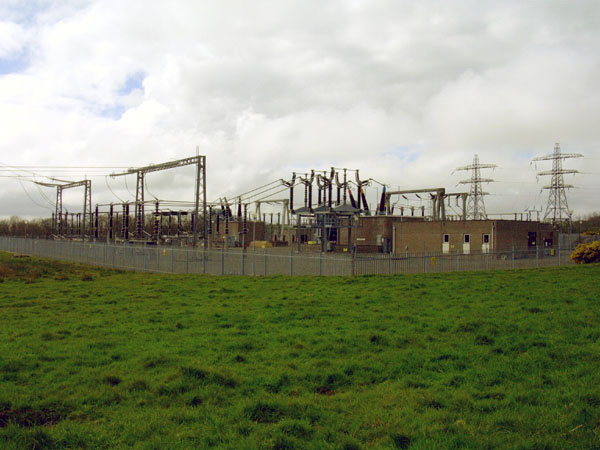
- David Neale. Hero image: Alverdiscott National Grid Substation - geograph.org.uk - 89419.jpg. Wikimedia Commons · CC BY-SA 2.0.Image source ↗
Related Sanctuary capabilities
From analysis to implementation.
Discussion
No approved comments yet.