
Key findings
- Online retail sales accounted for 28.8% of Great Britain retail spending in August 2026. In a channel where shoppers can compare, revisit and abandon offers quickly, price presentation is central to conversion and trust, not merely a compliance detail.
- The CMA is prioritising price transparency and misleading online choice architecture. Retailers should treat the advert, product page, basket and checkout as one connected consumer claim, with clear ownership of supporting evidence.
- Promotions can create legitimate value through stock clearance, bundles, loyalty or customer acquisition. But frequent, weakly substantiated percentage-off claims risk resetting customers’ expectations of the normal price and diluting future pricing power.
- The useful test for Black Friday is contribution-quality growth: whether an offer produces incremental contribution after discount, fulfilment, paid media, returns and service costs, while acquiring customers likely to return on sustainable terms.
The strategic issue is credible value, not simply discount depth
**Thesis.** Black Friday 2026 presents a management problem as much as a marketing opportunity. A retailer can increase clicks and short-term sales by making a strong price claim; it cannot assume that the resulting revenue is profitable, incremental or trust-building. The more durable advantage is the ability to make an offer that is clear to the customer, evidenced internally and economically coherent after the full cost of serving the order.
**Evidence.** The Office for National Statistics reported that online retail spending values increased by 1.9% in the three months to August 2026 compared with the preceding three months, and by 10.1% year on year. Online sales represented 28.8% of total retail spending in August, up from 28.4% in July (ONS, 2026) ↗. These figures are a useful indication of the commercial setting, although one month’s channel share should not be mistaken for a forecast of Black Friday demand.
The regulatory setting also matters. The CMA’s price-transparency guidance addresses the presentation of total prices and mandatory charges, while its 2026–27 plan identifies price transparency and misleading online choice architecture as early areas of investigation under its enhanced consumer enforcement role (CMA, 2025) ↗ (CMA, 2026) ↗.
**Analysis.** Digital retail makes promotional claims unusually easy to fragment. A customer may first see a percentage saving in paid social, encounter a different presentation in search, inspect qualifications on a product page, and discover an unavoidable charge only in the basket. Commercial teams often manage these as separate assets. Customers do not: they experience one promise about what the purchase will cost and what benefit they will receive.
This does not make discounting inherently problematic. Seasonal promotions can clear stock, introduce a product, create a useful bundle or reward a loyal customer. The point is more exacting: a discount is valuable only when the claimed saving, final cost and conditions are intelligible enough for the customer to assess the exchange. That standard is both a consumer-protection discipline and a conversion discipline. A click generated by an attractive headline price has limited value if late-stage surprise causes abandonment, complaints or costly service contacts.
**Sanctuary recommendation.** Treat promotion proof as a commercial capability. Before creative is commissioned, establish the precise offer, eligible products, dates, capacity or stock, unavoidable charges, comparator or normal price where relevant, and the person accountable for each item. This shifts governance upstream, where it can improve the offer rather than merely amend its wording at the end of the process.
Reference prices explain both the power and the risk of repeated promotions
**Evidence.** Research on reference prices shows that consumers evaluate a current price against a benchmark shaped by past experience, observed alternatives and the presentation of the offer. The formation, retrieval and use of these reference prices are central to price evaluation and purchase decisions (Mazumdar, Raj and Sinha, 2005) ↗. A wider review finds that pricing practices including reference pricing, drip pricing and “free” claims can materially affect consumer perceptions and behaviour, while the effects of time limits and bundles vary by context and customer characteristics (Ahmetoglu et al., 2014) ↗.
**Analysis.** This mechanism is why a large “was/now” claim can work in the short term—and why it can become self-defeating. If customers repeatedly encounter the same product at a lower price, the promoted price may become their working estimate of its true value. The nominal full price then loses persuasive force. The retailer is left choosing between extending the promotion, accepting weaker conversion at the higher price, or rebuilding differentiation through product, service, range or convenience.
That risk should not be overstated. Some categories are structurally promotional, and customers may rationally wait for predictable sale periods. Nor does research on consumer response determine whether an individual retailer’s campaign will erode margin or trust. The commercial outcome depends on category norms, frequency, competitor behaviour, product substitutability and the quality of the wider proposition. It is therefore a mistake to turn “avoid promotions” into a universal rule.
The better question is whether the mechanic fits a customer mission and a plausible route to profitable repeat behaviour. A gift bundle may simplify selection and lift order value. An early-access offer may reward an existing relationship without publicly lowering the reference price. A targeted clearance can release working capital. By contrast, a blanket percentage reduction across core products may win volume while offering no reason for a customer to return except for the next reduction.
**Sanctuary recommendation.** Require a campaign hypothesis that identifies the intended mechanism and trade-off. For example: “A clearly defined gift bundle will raise average order value among gift purchasers while maintaining contribution after fulfilment.” This is more useful than a generic expectation that “20% off will increase sales”, because it specifies the audience, the customer benefit and the economic test.
Price transparency belongs in the conversion journey, not in a legal checklist
**Evidence.** The CMA’s guidance illustrates the total-price principle in online retail. Where collection is unavailable and a minimum delivery charge is mandatory, the guidance indicates that the advertised price should include that charge. Where the relevant charge becomes known once an address is provided, it should be included in a clear running total at that point (CMA, 2025) ↗. ASA guidance likewise advises that quoted prices include non-optional taxes, duties, fees and charges. It notes the CMA position that, where no free delivery or collection option exists, the quoted online price should include the cheapest delivery option until the consumer selects another option (ASA, 2026) ↗.
The enforcement signal is no longer abstract. In its review of the first year of direct consumer enforcement, the CMA described a drip-pricing settlement involving consumer refunds and a financial penalty, and said it was continuing work on issues including default optional charges and false time-limited offers (CMA, 2026) ↗.
**Analysis.** Late-disclosed charges are often treated internally as a checkout matter. From the customer’s perspective, they can reverse the proposition that earned the click. That creates a compounded cost: paid-media expenditure is wasted, conversion can fall, customer service must resolve objections, and remarketing reaches a customer whose confidence has already been weakened.
The same logic applies to savings claims and urgency. A “from” price, an “up to” saving or a countdown may be useful information when it accurately describes a real offer. It becomes commercially fragile when the headline benefit is not realistically obtainable or the qualification is visually detached from the claim. The question is not whether a disclosure exists somewhere on the page; it is whether a reasonable customer can understand the actual proposition at the point it influences their decision.
**Sanctuary recommendation.** Conduct a five-stage price journey review across the advert or social post, search or marketplace listing, product or landing page, basket, and payment confirmation. On desktop and mobile, test whether an independent reviewer can identify without prompting: the total unavoidable price; the basis and conditions of any saving; the relevant product specification or quantity; and the realistic availability of the promoted offer. This is a practical control, not a substitute for legal advice on complex claims.
A proportionate promotion-proof model for SMEs and high-street businesses
**Evidence.** The CMA’s annual plan identifies hidden late-stage fees and objectively false information among behaviours of concern, alongside price-transparency and online-choice-architecture work (CMA, 2026) ↗. ASA guidance adds that price statements must relate to the product shown, and that “from” and “up to” claims should not exaggerate the availability or scale of the benefit customers are likely to obtain (ASA, 2026) ↗.
**Analysis.** The operational challenge for smaller businesses is usually not a lack of intent. It is fragmented ownership. A merchandiser changes a price, an agency reuses an old asset, operations alters delivery thresholds, and customer service receives complaints about the final total. Each decision may appear reasonable in isolation, but no one has tested the complete impression created for the customer.
A small retailer does not need an enterprise compliance department to address this. It needs a modest system that makes ownership visible and limits avoidable rework. That matters particularly for independent retailers and local consumer ventures, whose comparative advantage often lies in trusted service, specialist advice, local convenience or a carefully selected range—not in matching the promotional budgets of national platforms. Protecting trust is therefore part of protecting local economic value and management capacity.
**Sanctuary recommendation.** Use four linked controls during the autumn trading period:
1. **Maintain a claim register.** Record each material claim, including the relevant products or SKUs, sale price, any comparator or normal price used, campaign dates, channels, exclusions, stock or capacity assumptions, evidence location and named owner.
2. **Create a controlled source of price information.** Ensure that the website, email, paid social, marketplaces and in-store materials draw on approved values rather than separately maintained spreadsheets or old creative.
3. **Challenge the customer journey before launch.** Ask a colleague who did not build the campaign to complete a mobile purchase journey and report the price, saving conditions and delivery options they understood. Their uncertainty is a useful signal, not a user error.
4. **Review contribution quality, not sales alone.** Report net sales after discount, delivery subsidy, payment fees, returns, paid-media cost and service burden. Split results between new, returning and reactivated customers where the data permit.
The model supports better experimentation as well as better control. It allows teams to compare value mechanisms—bundles, early access, service additions, collection, loyalty benefits or differentiated support—against a common commercial standard rather than defaulting to a deeper headline discount.
Measure what Black Friday changes after the weekend has passed
**Evidence.** The ONS cautions that monthly retail movements can be volatile and should be considered alongside longer-run measures (ONS, 2026) ↗. The same caution is appropriate for promotional analytics: a campaign-period revenue spike does not by itself demonstrate incremental demand or sustainable profitability.
**Analysis.** Retailers need to separate at least three effects: demand brought forward from December or January; demand diverted from another channel or product; and genuinely incremental demand. A promotion can appear successful in a daily sales dashboard while reducing contribution through margin dilution, returns, fulfilment pressure or lower subsequent full-price conversion. Conversely, a campaign with a modest immediate uplift may be worthwhile if it efficiently acquires customers who return without comparable incentives.
There is no single metric that resolves these trade-offs. Attribution is imperfect, especially for SMEs with limited customer data and overlapping organic, paid and marketplace journeys. Management should therefore avoid false precision. The objective is not to prove a definitive causal effect from every campaign, but to make decisions using a fuller picture than headline revenue or conversion rate.
**Sanctuary recommendation.** Build a 30-, 60- and 90-day review around five questions: Did the campaign create incremental contribution? Did customers receive the price they reasonably expected? Which mechanics generated the fewest cancellations and service contacts? Did new customers make a second purchase without a comparable incentive? And did the offer strengthen a distinctive proposition—such as advice, convenience, trusted service or a differentiated range?
These questions connect promotional activity to productivity. They focus management time on reducing avoidable service work, improving the quality of customer acquisition and learning which offers produce value without permanently weakening price realisation.
Conclusion: protect credibility as a commercial asset
Black Friday 2026 should not prompt retailers to do less marketing; it should prompt them to govern marketing as part of the commercial system. Online shopping remains a substantial part of Great Britain retail, while regulators are actively focused on price transparency and online choice architecture (ONS, 2026) ↗ (CMA, 2026) ↗.
The practical test is straightforward but demanding. Is the offer clear, evidenced, realistically available and profitable after the full cost of serving it? Where the answer is yes, promotion can be a useful tool for stock management, customer acquisition and seasonal demand. Where the answer is no, a short-term conversion gain may merely transfer value from margin, operational capacity, trust and future pricing power.
Research foundation
References
- Office for National Statistics (2026). Retail sales, Great Britain: August 2026. ONS statistical bulletin.Source ↗
- Competition and Markets Authority (2025). Price transparency: Complying with the law on unfair commercial practices relating to price transparency (CMA209). GOV.UK.Source ↗
- Competition and Markets Authority (2026). CMA Annual Plan 2026 to 2027. GOV.UK.Source ↗
- Competition and Markets Authority (2026). Direct consumer enforcement: one year on. Competition and Markets Authority blog.Source ↗
- Advertising Standards Authority and Committee of Advertising Practice (2026). Prices: General. ASA/CAP AdviceOnline.Source ↗
- Tridib Mazumdar; S. P. Raj; Indrajit Sinha (2005). Reference Price Research: Review and Propositions. Journal of Marketing, 69(4), 84–102.Source ↗DOI: 10.1509/jmkg.2005.69.4.84
- Gorkan Ahmetoglu; Adrian Furnham; Patrick Fagan (2014). Pricing practices: A critical review of their effects on consumer perceptions and behaviour. Journal of Retailing and Consumer Services, 21(5), 696–707.Source ↗DOI: 10.1016/j.jretconser.2014.04.013
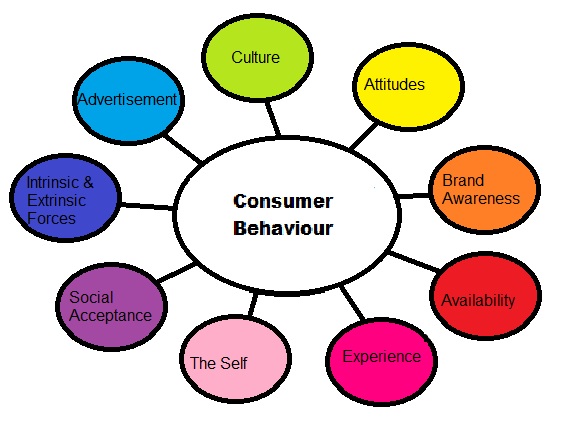
- U3100080. Hero image: Consumer behaviour.jpg. Wikimedia Commons · CC BY-SA 4.0.Image source ↗
Related Sanctuary capabilities
From analysis to implementation.
Discussion
No approved comments yet.