
Key findings
- NISTA’s 2026 Infrastructure Pipeline lists 734 planned public- and private-sector projects with £718 billion of investment over the following decade. It is an important signal of prospective demand, not proof that every scheme is funded, consented or ready to mobilise (NISTA, 2026a) [[nista2026pipeline]].
- The principal constraint is not capital alone. NISTA estimates average annual construction and infrastructure workforce demand of 629,000 to 706,000 over the next five years; pressure will vary by occupation, location and delivery phase (NISTA, 2026a) [[nista2026pipeline]].
- The Government Major Projects Portfolio recorded 42 exits in 2025–26, including seven projects brought to early closure. A healthy portfolio needs credible routes to stop, pause or reshape work as well as mechanisms to approve it (NISTA, 2026b) [[nista2026gmpp]].
- Early strategic challenge matters because a project can be deliverable as an asset while remaining weak as an intervention: the need may be poorly specified, dependencies may be unavailable, or no operator may be equipped to realise benefits.
- For local economies, the relevant question is not simply how much construction is announced. It is whether sponsors translate credible, sequenced demand into accessible procurement, skills pathways, viable operating models and lasting local value.
The UK’s infrastructure challenge is now a portfolio-choice problem
**Evidence.** The UK’s 10 Year Infrastructure Strategy presents infrastructure as a means to support economic opportunity, housing, public services, neighbourhoods and resilience. It also identifies longstanding problems of erratic investment, weak coordination and slow, costly delivery (HM Treasury and NISTA, 2025) ↗. NISTA’s 2026 Infrastructure Pipeline provides a more visible forward view: 734 planned public- and private-sector projects, representing £718 billion over ten years, alongside workforce-demand analysis intended to help industry plan (NISTA, 2026a) ↗.
**Analysis.** This is more than a communications exercise. Better visibility can help suppliers invest, education providers shape provision and public bodies identify shared dependencies. But a pipeline is not yet a deliverable portfolio. It contains work at different levels of strategic maturity, funding certainty, design development and commercial readiness. Treating its headline value as a measure of delivery confidence would confuse prospective demand with commitments that can actually be executed.
That distinction matters because infrastructure competes for a finite pool of inputs. Two individually attractive schemes may rely on the same specialist labour, grid capacity, planning resource, land assembly, senior sponsorship or enabling works. Starting both may delay both. A less visible intervention—maintenance, digital improvement, utilities reinforcement or site preparation—may create more value if it unlocks several later schemes or reduces operational risk.
The strategic unit, therefore, is not the project in isolation. It is the combination of interventions that can be delivered together, in a sequence that protects service quality and retains the capacity to respond when conditions change. The relevant question for 2026–27 is not how many schemes an institution can place in a plan. It is which set of commitments remains feasible and worthwhile once shared constraints are made explicit.
A pipeline should separate need, choice, readiness and benefits
**Evidence.** The Infrastructure Pipeline is deliberately a forward-looking view of projects and programmes being planned or progressed; it should not be read as confirmation that every entry has completed business-case, consenting, procurement, financing and mobilisation requirements (NISTA, 2026a) ↗. Research on major projects also warns that early estimates of costs and benefits can be systematically over-favourable, weakening decisions made on an incomplete view of risk (Flyvbjerg, 2009) ↗.
**Analysis.** Public debate often collapses four different questions into one announcement:
1. **Need:** Is there a clearly evidenced problem or opportunity, and for whom?
2. **Option:** Has the preferred intervention been chosen against credible alternatives, including non-capital options?
3. **Delivery readiness:** Are land, permissions, design, procurement, finance, workforce and interfaces sufficiently credible?
4. **Benefits readiness:** Is a named organisation able and funded to operate, maintain and adapt the intervention so that intended outcomes occur?
A scheme may pass the need test while failing the last two. A new transport interchange, college facility or town-centre asset can be completed to programme but produce weak outcomes if staffing, tenant strategy, maintenance, connecting services or business support are treated as issues for after handover. Equally, a solution that appears ready to build may not be the best response to the underlying need.
This is not an argument for avoiding ambitious projects. It is an argument against false precision at the point of approval. Flyvbjerg’s warning is especially relevant where a preferred solution has acquired political or organisational momentum before uncertainties have been exposed. Staged commitments, independent challenge and explicit conditions for progressing are often more rigorous than a single early promise of cost, date and benefit.
**Sanctuary recommendation.** Sponsors should publish a simple maturity view for significant schemes: need, option, delivery readiness and benefits readiness. That would make uncertainty more visible, but it would also prevent suppliers, communities and partner organisations mistaking an aspiration for an imminent opportunity.
Workforce capacity is a portfolio budget, not a delivery afterthought
**Evidence.** NISTA estimates that the published pipeline will require an average annual construction and infrastructure workforce of 629,000 to 706,000 over the next five years. Its analysis recognises that demand differs by occupation, geography and phase of work (NISTA, 2026a) ↗.
**Analysis.** Capital allocation authorises spending; it does not create planners, project managers, engineers, surveyors, skilled trades, client-side commercial capability or the people required to operate assets afterwards. Nor does it secure sites, connections, statutory approvals or capable supply chains. These are shared constraints, which is why they must be managed at portfolio level rather than left to individual project teams.
The aggregate workforce range is useful, but it should not be treated as a local capacity forecast. National totals can look manageable while a particular place faces a shortage of a specific trade, design discipline or client capability at the point when several schemes reach construction together. Conversely, a well-sequenced pipeline can give employers, training providers and SMEs sufficient confidence to invest in apprenticeships, accreditation, equipment and partnerships.
There is a practical implication for smaller firms. A pipeline headline is not a procurement opportunity unless businesses can see plausible timing, package size, commercial route, technical requirements and payment profile. Vague long-term visibility may encourage interest, but it cannot reliably support recruitment or investment. For sponsors, late reliance on external advisers can also mask rather than solve a capability gap. External expertise is often necessary; the client still needs the capacity to define outcomes, challenge assumptions, manage interfaces and own benefits.
**Sanctuary recommendation.** Add a capacity budget to every major local or organisational portfolio. It should map critical roles, bottleneck suppliers, planning and statutory-consultee dependencies, operating staff and demand peaks. Where a constraint appears, leaders must choose: sequence differently, standardise, develop suppliers, form a delivery partnership, reduce scope or defer work. Ignoring the constraint does not remove it; it usually reappears as delay, cost escalation or compromised quality.
A credible exit route is a sign of governance, not defeat
**Evidence.** NISTA’s Major Projects Annual Report records 42 projects leaving the Government Major Projects Portfolio in 2025–26. Twenty-six reported delivery against objectives, one was replaced by another portfolio project, eight no longer met reporting criteria and seven were brought to early closure. NISTA provides scrutiny, intervention, specialist support and recommendations, while departments remain accountable for their projects (NISTA, 2026b) ↗.
**Analysis.** Exit data should not be used as a simple league table of success or failure. Completion can conceal weak benefits, while early closure can be the right response when needs change, dependencies fail or a better route emerges. The more revealing test is whether a portfolio recognises those conditions early enough to preserve resources and learning.
This matters because sunk-cost reasoning is powerful. Once money, organisational reputation and political attention are committed, sponsors can become more inclined to defend an initiative than to reassess it. The cost is larger than expenditure on the weak project itself. It includes management time, supplier capacity and leadership attention that cannot be directed towards more viable work.
**Sanctuary recommendation.** Approval should include pre-agreed tests for stopping, pausing or reshaping a scheme. These should cover the continuing need, key dependencies, forecast cost and schedule, whole-life affordability, operating readiness and the ownership of benefits. A quarterly portfolio review should have authority to act on those tests and record the rationale. Revision should be treated as disciplined stewardship, not an embarrassment to be hidden.
Assurance has greatest value before sponsors lock into a solution
**Evidence.** NISTA’s Gate Review 0 guidance provides independent advice at key decision points and is anchored in the Five Case Model. The guidance also distinguishes a Gate Review from a full audit opinion on risk management, control and governance (NISTA, 2026c) ↗.
**Analysis.** Assurance is sometimes treated as a late-stage hurdle applied to a project that has already been defined. Its greatest strategic value is earlier, when a sponsor can still reconsider the asset, site, technology, delivery model or even whether capital investment is the right response. Later scrutiny remains essential, but it often has to manage the consequences of early choices: a narrow brief, an untested demand assumption, omitted enabling works or an operating model without sustainable funding.
The counterargument is that repeated review slows action. That risk is real if assurance duplicates decisions or asks for information with no bearing on the next commitment. Well-designed challenge does the opposite: it concentrates scrutiny where reversibility is greatest and avoids expensive change once procurement or construction has begun.
**Sanctuary framework.** Before committing to a preferred solution, decision-makers should test four issues:
- **Need:** What outcome is failing, for whom, and against what baseline?
- **System:** Which dependencies and competing schemes determine feasibility?
- **Operation:** Who will staff, maintain and adapt the intervention throughout its life?
- **Option value:** What flexibility is lost by committing now rather than phasing, piloting or preserving alternatives?
These tests are relevant beyond nationally significant infrastructure. They apply to estate change by colleges and anchor institutions, high-street reuse, digital service transformation and place-based regeneration programmes.
Local economic value is created through mobilisation and operation
**Evidence.** The national strategy links infrastructure with jobs, housing, neighbourhoods, public services and resilience, while the Pipeline update presents workforce information as a basis for industry skills and investment planning (HM Treasury and NISTA, 2025; NISTA, 2026a) ↗ ↗.
**Analysis.** Those outcomes will not follow automatically from construction spend or generic social-value commitments. They depend on mechanisms: early market engagement, package sizes that capable SMEs can realistically bid for, proportionate requirements, workable payment terms, training aligned to actual occupations, and a plan for maintenance and local service delivery after construction.
There is a genuine trade-off. Bundling contracts may improve coordination, standardisation and risk management, but can exclude smaller firms without the balance sheet or bid capacity to participate. Fragmenting packages may widen access for SMEs, social enterprises and local suppliers, but can raise interface and contract-management costs. The answer is not a universal preference for smaller or larger contracts. It is an honest assessment of which work is genuinely indivisible and high-risk, and which can be structured into accessible packages without weakening delivery.
For high streets and local growth, this distinction is critical. A capital project may improve a place physically but still fail to strengthen entrepreneurship or employability unless it is connected to business support, skills provision, affordable occupation and a durable operating model. Procurement can contribute to local value; it cannot substitute for the wider economic system that makes an asset useful.
**Sanctuary recommendation.** Before procurement, sponsors should prepare a mobilisation plan covering expected packages, capability requirements, supplier-development activity, evidenceable social-value outcomes and named owners for post-construction benefits. This gives local firms and training providers a clearer basis on which to prepare, while making the route from investment to local outcomes testable rather than aspirational.
The next 90 days: convert visibility into disciplined choices
The strategic frame, expanded pipeline, major-projects reporting and refreshed assurance guidance give UK institutions better conditions for planning than a disconnected set of announcements would provide (HM Treasury and NISTA, 2025; NISTA, 2026a; NISTA, 2026b; NISTA, 2026c) ↗ ↗ ↗ ↗. They do not remove the need for judgement.
A practical 90-day agenda for public bodies, developers, anchor institutions and delivery partners is to:
1. **Clean the pipeline.** Classify initiatives by need, option, delivery readiness and benefits readiness; remove unwarranted certainty from dates, costs and outcomes.
2. **Map shared constraints.** Identify workforce, planning, land, grid, procurement, finance and operating dependencies across the portfolio, rather than project by project.
3. **Prioritise enabling value.** Rank maintenance, enabling works and service changes by the wider outcomes they unlock or the failures they avert—not only by visibility.
4. **Set intervention triggers.** Agree the evidence that would justify acceleration, redesign, pause or closure before avoidable commitment accumulates.
5. **Make local value operational.** Give SMEs, education providers, community organisations and delivery partners enough clarity to prepare for real opportunities, then measure outcomes beyond practical completion.
The decisive measure of progress will not be whether the pipeline becomes larger. It will be whether a greater proportion of commitments are genuinely ready, whether weak work is stopped earlier, and whether constrained capability is directed towards interventions that remain useful in operation. That is the shift from a list of projects to a strategy for delivery.
Research foundation
References
- HM Treasury and National Infrastructure and Service Transformation Authority (2025). UK Infrastructure: A 10 Year Strategy. GOV.UK.Source ↗
- National Infrastructure and Service Transformation Authority; HM Treasury (2026). Infrastructure Pipeline update signals future workforce needs. GOV.UK.Source ↗
- National Infrastructure and Service Transformation Authority (2026). NISTA Major Projects Annual Report 2025–26. GOV.UK.Source ↗
- National Infrastructure and Service Transformation Authority (2026). Gate Review 0: Strategic Assessment. GOV.UK.Source ↗
- Bent Flyvbjerg (2009). Survival of the unfittest: why the worst infrastructure gets built—and what we can do about it. Oxford Review of Economic Policy, 25(3), 344–367.Source ↗DOI: 10.1093/oxrep/grp024
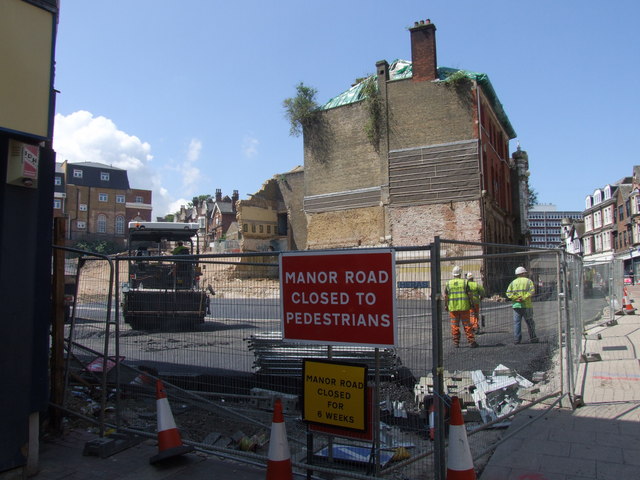
- Chris Whippet. Hero image: Construction of the Sir John Hawkins Car Park & Theatre Royal Square in Chatham, Kent, England, 28 May 2009.jpg. Wikimedia Commons · CC BY-SA 2.0.Image source ↗
Related Sanctuary capabilities
From analysis to implementation.
Discussion
No approved comments yet.