
Key findings
- The £125 million Derelict Buildings Fund is a significant opportunity to convert conspicuous vacant assets into productive civic, commercial and community uses. But capital expenditure is not, by itself, a model for sustained occupation.
- High streets are changing rather than simply declining: central high-street retail employment fell by 19% between 2015 and 2024, while accommodation and food employment rose by 18%. Reuse strategies must therefore start with local need and viable mixed-use demand, not a presumption that lost retail can be restored.
- Evaluation evidence supports targeted place investment, including a relative 6.7% footfall increase in Future High Streets Fund locations. Yet footfall is an intermediate measure, and reported business-creation effects remain mixed and sensitive to delivery disruption.
- The new retail, hospitality and leisure business-rates multipliers can improve certainty for eligible occupiers, but many proposed reuse models—including offices and some health services—will not qualify. Financial appraisals need to test the actual cost base of the intended use.
- Funding decisions should assess every project as a five-year operating proposition: a building, an accountable operator, a revenue stack, maintenance provision and measurable local economic value.
The policy opportunity is real—but reopening a building is not the same as restoring a high street
England’s £210 million high-street package, including a £125 million Derelict Buildings Fund, puts capital behind a problem that is both economically consequential and highly visible. The fund is intended to help local authorities bring vacant shopping centres, former cinemas and other derelict premises back into use as, among other things, shared workspaces, cafés, health centres and civic spaces. The wider package also includes support for communities seeking to rescue valued buildings and businesses, and a regional Co-operative Development Programme (MHCLG, 2026) ↗.
This matters now because empty property does more than depress appearances. Persistent vacancy can weaken neighbouring trade, reduce passive surveillance, signal risk to investors and sever access to the everyday services and social spaces that make a centre useful. Yet the appropriate measure of success is not simply how many buildings are renovated, or how rapidly vacancy is reduced at the point of project completion. It is whether the resulting premises remain open, affordable and locally valuable once grant funding and public attention recede.
That is a more demanding question because the economic role of high streets has changed. Office for National Statistics analysis records a 19% fall in retail employment on central high streets between 2015 and 2024, alongside 18% growth in accommodation and food employment. It also finds that roughly one fifth of people in Great Britain live on or around a high street. Centres are therefore not merely retail destinations: they are employment locations, residential neighbourhoods and local-service infrastructure (ONS, 2026) ↗.
The implication is not that retail is unimportant. Independent shops and everyday retail still matter to convenience, local distinctiveness and spend retention. It is that a credible reuse strategy cannot begin with a nostalgic target for restoring a previous tenant mix. It must ask what combination of services, enterprise space, culture, hospitality, homes and public functions is viable in this catchment.
**Sanctuary assessment:** the fund’s strongest projects will treat refurbishment as one stage in an operating model. Before approving works, partners should be able to answer five practical questions: who will use the building repeatedly; who will operate it; which income pays for staffing, maintenance and programming; what risk sits with the public sector; and how will the activity strengthen the wider centre rather than merely occupy a unit?
What the evidence supports—and what it does not
There is good reason to take place investment seriously. The final Towns Fund evaluation found that Future High Streets Fund locations experienced a 6.7% increase in footfall relative to comparator towns. By the third quarter of 2025, their footfall had recovered to 97.9% of the equivalent 2019 level, compared with 91.3% in non-funded comparators. Case-study evidence associated stronger recovery with improvements to appearance and accessibility (MHCLG, 2026) ↗.
This is important evidence against the claim that physical and public-realm investment is inherently cosmetic. Better-quality, more accessible places can make visits easier and more attractive, which can widen the opportunity for local businesses and services. Heritage-led regeneration reinforces the point. Historic England reports that High Streets Heritage Action Zones combined repair and public-realm works with cultural activity, community engagement and partnership-building. The programme reported 723 historic buildings repaired, 224 homes created or brought back into use, and more than 700 new jobs (Historic England, 2025) ↗.
However, neither set of findings justifies treating capital projects as automatically self-sustaining economic interventions. Footfall is an intermediate outcome. It may increase the opportunity for spending, but it does not establish that local firms are profitable, that residents can afford the offer, or that benefits are retained locally. Conversion from visits to local economic value depends on the quality and affordability of the offer, access and safety, business capability, local supply chains and the reasons people return.
The Towns Fund evaluation also warrants methodological caution. Longer-term outcomes were still emerging, and business-creation findings were not uniform: Town Deal areas showed a positive but model-sensitive trend, while Future High Streets Fund areas saw a short-term relative fall in business numbers. The evaluation indicates that construction and delivery disruption may partly explain the latter (MHCLG, 2026) ↗. This does not invalidate investment; it means delivery plans should include support for existing firms, clear communication and a realistic period for benefits to mature.
There is a legitimate counterargument. Where severe disrepair, contamination or poor accessibility prevents any tenant from operating safely, capital must come first. That is correct. But it argues for sequencing rather than a capital-only approach: remediate the asset, secure a capable operator and working-capital plan, then open with a use strategy that has been tested against local demand. A renovated empty building remains a liability, albeit a more expensive one.
Business rates reveal why use mix must be financially specific
The policy environment will matter to whether new occupiers survive. From April 2026, qualifying occupied retail, hospitality and leisure properties with rateable values below £500,000 receive multipliers set 5p below the equivalent national multipliers. Government estimates that more than 750,000 hereditaments benefit (HM Treasury, 2025) ↗. For eligible independent shops, cafés, leisure venues and qualifying publicly accessible facilities, greater certainty in the rates regime can improve the viability of a marginal location or a new enterprise.
But the Derelict Buildings Fund’s proposed uses are broader than qualifying retail, hospitality and leisure activity. The relevant guidance is explicitly use-specific: a property must be wholly or mainly used for a qualifying activity available to visiting members of the public. Office space does not become eligible because it contains a small retail element. Medical and health services, professional services and several other activities are excluded, although treatment of community facilities depends on their principal use and public accessibility (HM Treasury, 2026) ↗.
This creates a practical, not ideological, trade-off. A health centre could have stable commissioner-backed income and meet an important local need, while making a more limited contribution to evening activity. Flexible workspace might support entrepreneurship and enable small firms to grow, but requires active membership sales, digital infrastructure and skilled day-to-day management. A community hub may produce strong social value but depend on a blend of room hire, trading, grants and volunteer capacity. None is an inferior use; each carries a different demand profile, rates position and operational burden.
**Sanctuary recommendation:** require a use-to-cost schedule before final capital approval. It should set out the intended principal use, likely rates treatment, rent or licence assumptions, utilities, insurance, staffing, operator overhead, maintenance reserve and fit-out replacement cycle. It should also distinguish contracted income from forecast trading income and identify the source of any ongoing subsidy. This is a basic discipline of asset stewardship, not a bureaucratic hurdle. It prevents a programme intended to diversify high streets from funding socially attractive uses without a route to continuity.
Vacancy powers can unlock premises, but cannot create a market
High Street Rental Auctions give English local authorities an additional tool where commercial premises have been persistently empty. A property can meet the vacancy condition after being continuously unoccupied for 365 days, or for at least 366 days during a 24-month period. The guidance also allows different floors to be considered separately where they can reasonably operate as distinct units—a potentially useful route for bringing a public-facing ground floor back into use while upper floors follow a different conversion or leasing pathway (MHCLG, 2025) ↗.
The power can help overcome inertia, especially where a viable prospective occupier is blocked by an owner’s unwillingness or inability to let. It should not, however, be mistaken for a universal answer to vacancy. The guidance itself advises against an auction where there is unlikely to be a sufficient tenant base at a fair market rent, or where substantial defects, safety issues or complex redevelopment plans make the approach unsuitable (MHCLG, 2025) ↗.
That distinction is central to sound regeneration policy. Some vacancy is indeed a property-management or landlord-behaviour problem. Elsewhere, it reflects weak demand, unsuitable floorplates, high repair liabilities, fragmented ownership or a business model misaligned with the catchment. An auction can lower the barrier to occupation; it cannot generate customers, improve an operator’s management capability or guarantee that a new tenant can survive.
Councils should therefore use rental auctions within a segmented property strategy. That strategy should distinguish premises suitable for immediate re-letting from those requiring low-cost meanwhile use, subdivision, repair and conversion, acquisition, or—in a smaller number of cases—planned redevelopment or de-intensification. A short lease that gives an entrepreneur a low-risk route to test demand can be valuable. A short-lived occupation used solely to improve a vacancy statistic is not.
A five-year activation-to-operation test
The fund can produce stronger, more accountable decisions if every candidate asset is assessed as a five-year operating proposition rather than a construction project. The following tests convert that principle into delivery practice.
**1. Test demand before commissioning design.** Use local evidence on resident demographics, existing supply, service access, footfall patterns, business demand and spending leakage. Consultation should prioritise people and organisations likely to use the space, not only general expressions of support. Since high streets are also residential places, the right answer may be accessible everyday services, advice and health provision rather than another discretionary retail offer (ONS, 2026) ↗.
**2. Secure the operator before opening day.** Identify the accountable operator at outline-business-case stage and test governance, trading record, staffing, procurement capacity, reserves and safeguarding arrangements where relevant. Community ownership and co-operative structures may offer strong local legitimacy, but legitimacy is not a substitute for operational capability.
**3. Build a credible revenue stack.** Map rents, service contracts, memberships, room hire, events, retail margin, grants, sponsorship and cross-subsidy. State which revenues are contracted, which are evidence-based forecasts and which remain contingent. Capital funding may repair a roof, but it rarely covers a programme manager, cleaning, condition surveys or a replacement boiler five years later.
**4. Measure district effects as well as unit performance.** A lower-return civic or health use can be justified where it improves access and drives complementary trips. The expected mechanism should nevertheless be explicit: longer dwell time, local supplier spend, reduced antisocial behaviour, apprenticeships, workspace for local firms, or more reliable day-to-evening activity. This connects regeneration to SME growth, employability and local economic value rather than treating occupation as the endpoint.
**5. Govern adaptively.** Agree a small set of leading indicators—occupation, repeat visits, event utilisation, earned-income share, local procurement, maintenance backlog and user satisfaction—and review them quarterly. Pre-agreed intervention triggers should allow partners to alter programming, sublet underused space, change opening hours or introduce business support before a building drifts back into vacancy.
This emphasis on local capacity is consistent with the Towns Fund evaluation, which identifies the importance of local engagement, expertise and capacity funding to stronger delivery (MHCLG, 2026) ↗.
Judge the fund by durable use, not the reopening ceremony
The Derelict Buildings Fund should be welcomed. It addresses a visible manifestation of economic drift and gives local authorities an opportunity to make difficult assets useful again. Its success, however, should not be judged by ribbon-cuttings, façade improvements or a one-off reduction in vacancy.
By 2031, a credible outcome would be a portfolio of premises that are still active and affordable, operated by viable organisations, and matched to the needs of their places. It would include stronger independent operators and local supply chains where commercial demand exists, alongside accessible public-facing services where social need is greater. It would also acknowledge that some buildings should not return to their former use, and that a managed mixed-use transition is often a better result than an unsuccessful attempt to recreate a lost retail economy.
The strategic risk is institutional fragmentation: one team funds repairs, another seeks an occupier, another monitors footfall, and no organisation owns the economic life of the asset. The policy opportunity is to combine capital funding, property powers, business support and operating capacity around a single accountable plan. If councils do that, the fund can create more than improved buildings. It can create premises that help local enterprises trade, residents access services and town centres retain a practical role in everyday economic life.
Research foundation
References
- Ministry of Housing, Communities and Local Government (2026). Boarded-up high streets brought back to life with £210m boost. GOV.UK.Source ↗
- Office for National Statistics (2026). High streets and retail areas in Great Britain: March 2026. Office for National Statistics.Source ↗
- Ministry of Housing, Communities and Local Government (2026). Towns Fund Evaluation: final findings – summary for policymakers. GOV.UK.Source ↗
- Historic England (2025). The Value of High Street Heritage Action Zones. Historic England.Source ↗
- HM Treasury (2025). Effects of the business rates retail, hospitality and leisure multipliers and high-value multiplier. GOV.UK.Source ↗
- HM Treasury (2026). Business Rates Multipliers: Qualifying Retail, Hospitality or Leisure. GOV.UK.Source ↗
- Ministry of Housing, Communities and Local Government (2025). High Street Rental Auctions: Non-statutory guidance. GOV.UK.Source ↗
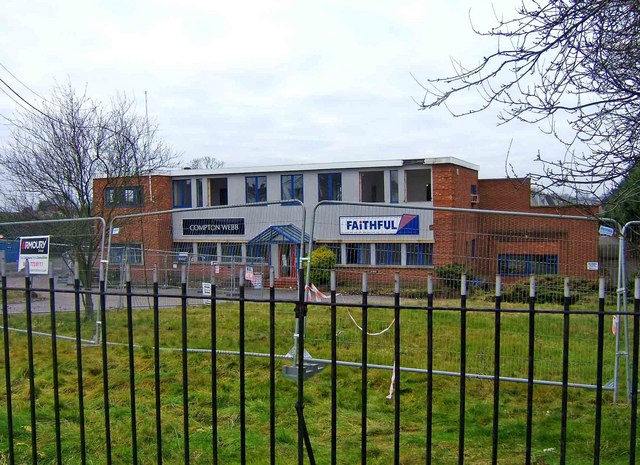
- P L Chadwick. Hero image: Former premises of Compton Webb Ltd and Faithful Ltd, Northwick Road, Northwick, Worcester - geograph.org.uk - 1090286.jpg. Wikimedia Commons · CC BY-SA 2.0.Image source ↗
Related Sanctuary capabilities
From analysis to implementation.
Discussion
No approved comments yet.