
Key findings
- Retail-sales volumes in Great Britain rose in August 2026 and across the preceding three months, but national sales data cover stores and non-store channels and cannot diagnose the performance of individual town centres. (Office for National Statistics, 2026) [[ons2026retail]]
- High-street footfall was 3.1% lower year on year in August, while retail-park footfall rose by 1.0%. This does not establish a universal decline in town centres, but it shows that consumer demand is being distributed differently across formats. (British Retail Consortium, 2026) [[brc2026footfall]]
- The Towns Fund evaluation found a relative footfall uplift in Future High Streets Fund-supported places, demonstrating that targeted investment can improve conditions. It does not yet show that footfall gains consistently translate into business survival, employment or locally retained value. (MHCLG, 2026) [[mhclg2026townsfund]]
- High Street Rental Auctions may help unlock a limited group of persistently vacant premises, but they cannot substitute for property readiness, credible occupier demand and support for firms after they open. (MHCLG, 2025; BCP Council, 2026; North Northamptonshire Council, 2026) [[mhclg2025hsra]] [[bcp2026hsra]] [[nnc2026hsra]]
Retail growth is a demand signal, not a town-centre verdict
The central mistake in high-street debate is to treat a national retail-sales release as a verdict on local recovery. Great Britain retail-sales volumes rose by 0.5% in August 2026 and by 0.9% across the three months to August. That is a welcome indication that consumer demand has strengthened. It is not evidence that traditional centres are becoming commercially viable.
The distinction matters now because local authorities, property owners and small firms are making decisions about capital programmes, leases and business support in a market where demand is fragmented. The Retail Sales Index measures national activity across physical and non-store retail. It cannot reveal where spending occurred, which places captured it, or whether independent firms and local employers benefited. The Office for National Statistics also cautions that monthly movements can be volatile, so the three-month trend carries more weight than a single monthly rise. (Office for National Statistics, 2026) ↗
The composition of growth further limits any simple recovery narrative. Over the three months to August, non-food store volumes rose by 0.2%, while food retail and non-store sales contributed more strongly. Online spending values rose over the period, and online’s share of retail spending increased between July and August. This is not a crude physical-versus-digital story: many retailers operate stores, collection and delivery as one model. But it does mean that more spending nationally can coexist with weak trading conditions on a particular high street. (Office for National Statistics, 2026) ↗
Footfall data point to the same uneven geography of demand. High-street footfall was 3.1% lower year on year in August, compared with a 0.5% fall for shopping centres and 1.0% growth at retail parks. Footfall and sales are different measures, and neither series can prove why performance differs between locations. Taken together, however, they show why national retail growth cannot settle the local question: does this centre generate enough demand, repeat use and commercial conversion to sustain occupiers? (British Retail Consortium, 2026) ↗
**Sanctuary’s view is that town-centre strategy should be organised around conversion rather than footfall alone.** The objective is to convert journeys, visits, events, public investment and empty premises into viable firms, repeat custom, accessible jobs and reinvestment. Footfall is an important input to that process. It is not its final outcome.
The real issue is whether a place can capture demand
Demand, visits and local economic value diverge for practical reasons. A household can spend more while visiting a retail park, ordering online, using click-and-collect, or making a short trip to a town centre for one element of a wider shopping journey. A national spending increase therefore does not tell local leaders whether their centre has won or lost custom.
Nor are all visits economically equivalent. A pass-through trip, a supermarket mission, a medical appointment and a multi-stop leisure visit may each add to a footfall count, yet they create different opportunities for dwell time, cross-spend and discovery of local firms. A centre that attracts large numbers for a narrow-purpose visit may remain a difficult place for an independent retailer, café or service business to trade profitably.
This makes proposition more important than generic animation. Centres should identify the journeys they can serve credibly: compact errands, transport-linked convenience, independent retail discovery, hospitality, culture, evening activity, civic services, family activity or workspace. Trying to reproduce every offer available in larger centres or retail parks is unlikely to be a viable response to changing consumer patterns.
There is also a capture problem after public investment. Better streets, accessibility, wayfinding and perceptions of safety may deliver genuine social value before commercial effects emerge. But additional visitors can still leak away when nearby businesses lack the right offer, opening hours, digital visibility, staffing or working capital to serve them. For SMEs, the binding constraint may be management capacity or finance rather than passing trade. Capital investment without enterprise support can therefore improve the experience of a place without materially strengthening its business base.
Research on five UK city centres gives this argument a useful property-market context. It found rising vacancy alongside greater diversity in property use, indicating adaptation rather than a simple linear ‘death of the high street’. Yet diversity alone is not a solution. Its economic value depends on whether uses generate complementary activity across the day and week, rather than isolated pockets of demand. (Cities, 2023) ↗
The counterargument holds: targeted investment can improve performance
A conversion-led approach is not an argument against public-realm or access investment. The final Towns Fund evaluation offers meaningful evidence that targeted intervention can improve town-centre performance. Future High Streets Fund-supported places recorded a 6.7% footfall increase relative to comparator towns. In the third quarter of 2025, funded towns reached 97.9% of their 2019 monthly footfall, compared with 91.3% in the comparator group. The evaluation also found a statistically significant 3.8-percentage-point improvement in pride in place in selected case-study towns where projects were visible and responsive to local needs. (MHCLG, 2026) ↗
These findings challenge fatalism. They support investment where poor public realm, access or confidence is suppressing use of a centre. They also suggest that place-based projects can make a difference relative to similar towns.
The evidence nevertheless has boundaries. The evaluation reports early observable effects from projects completed in time for assessment, not a final account of every programme outcome. At the point considered, 35.1% of Future High Streets Fund projects and 14.7% of Town Deal projects had been completed. Relative footfall improvement is therefore encouraging evidence of programme contribution, not proof that every funded place will secure durable gains in productivity, employment or business survival. (MHCLG, 2026) ↗
The relevant test is a chain of results: **public realm and access → quality of visit and dwell → spending or service use → business resilience and investment → jobs and locally retained value**. A project may succeed at the first two stages and still underperform at the later ones. That risk rises when regeneration is treated as a capital programme rather than an ongoing discipline of property coordination, business support, programming and centre management.
Replace the footfall leaderboard with a conversion dashboard
Footfall should remain on the dashboard, but it should not dominate it. Sanctuary recommends that priority streets and centres are assessed through four connected lenses.
**Demand quality.** Track footfall by daypart and season, alongside dwell time, repeat visits, visitor origin and visit purpose where data can be collected lawfully and proportionately. Following an event, the key question is not simply attendance; it is whether the activity generated longer visits, return trips or new customers for local firms.
**Commercial conversion.** Monitor vacancy duration, occupancy, lease renewals, openings and closures, alongside business-reported sales or spend proxies where firms choose to share them. These measures are imperfect, especially for small businesses, but they are closer to commercial health than a count of pedestrians. The Towns Fund evaluation’s attention to additional visitor hours is a useful reminder that duration and quality of visits matter as well as volume. (MHCLG, 2026) ↗
**Local-value capture.** Track the survival and growth of locally owned firms, local procurement by anchor institutions, and entry-level employment and progression opportunities. A busy centre with few routes for local entrepreneurs to secure space, recruit staff and grow has activity, but limited local economic agency.
**Operating capacity.** Measure how rapidly the place can move from identifying an empty unit or trading problem to action: landlord engagement, condition surveys, demand testing, licensing resolution, business-support referral or trial occupation. This is the management layer between a regeneration strategy and a result.
The purpose is operational, not presentational. A regular review should change decisions on cleaning, event timing, transport coordination, recruitment of missing uses and conversations with owners. It should identify where demand is being lost and which intervention is proportionate, rather than produce a retrospective scorecard.
High Street Rental Auctions are a test of local delivery capability
High Street Rental Auctions are relevant to the conversion challenge, but they are not a shortcut to a healthier centre. The framework enables councils, subject to statutory conditions and process, to pursue short-term tenancies for qualifying persistently vacant premises in designated areas. Government guidance is clear that auctions may be unsuitable where substantial redevelopment is planned, the property is in poor condition, or there is insufficient likely tenant demand at a fair market rent. (MHCLG, 2025) ↗
That qualification is economically important. Vacancy may reflect unrealistic rent expectations or transaction friction, which an auction could help address. It may also reflect disrepair, fragmented ownership, unsuitable unit configuration, weak demand or a failing centre proposition. A route to occupation cannot manufacture a viable tenant pipeline, nor can it ensure that a new enterprise survives after its initial tenancy.
Early local activity underlines the preparatory burden. BCP Council describes designation of its town-centre area as the first stage of a process that could take several months before an initial auction because notices and other preparation are required. North Northamptonshire Council has focused on identifying the locality with the greatest concentration of potentially eligible long-term vacancies before progressing a targeted proposal. These are useful examples of implementation work, not yet evidence that auctions deliver sustained occupancy or wider economic outcomes. (BCP Council, 2026; North Northamptonshire Council, 2026) ↗ ↗
**Sanctuary recommendation:** before considering an auction, authorities should assess condition and repair costs; map ownership and lending interests; test occupier demand; identify viable uses; connect prospective tenants to business support; and plan for the period after opening. This is more demanding than maintaining a vacancy register, but it avoids treating a short-lived letting as regeneration success.
What a conversion-led approach requires this autumn
The immediate requirement is a named operating function that can join up data, property conversations, enterprise support and programme delivery. It may sit within a council, business improvement district, town team or formal partnership. Its institutional home matters less than its authority to act across organisational boundaries.
For property owners, the discipline is segmentation. A unit awaiting redevelopment, a unit needing modest repair, a unit carrying an unrealistic rent expectation and a unit with no credible occupier market need different responses. Treating every vacancy as a marketing failure delays the appropriate intervention and obscures the true cost of reuse.
For SMEs and prospective occupiers, better place management does not remove the need for commercial discipline. Businesses should test actual demand at a location: weekday and evening trade, likely conversion, staffing availability, digital discovery, delivery or collection opportunities, and whether neighbouring uses complement the offer. Temporary occupation can be a valuable demand experiment, but only where it has defined success criteria, working-capital assumptions and a route to exit, extend or scale.
For funders, every capital business case should include a benefits-realisation plan. It should specify what the intervention is intended to convert, who is expected to capture the benefit, what evidence will test that expectation and what action will follow if results disappoint. This does not create false precision in a complex local economy. It makes assumptions visible and enables adaptation.
August’s retail figures are neither grounds for pessimism nor permission for complacency. They show improving but uneven demand. Town centres will not be renewed by national growth alone; they will be renewed where local partners can turn demand into enterprises that endure, employment that is accessible and investment that recirculates through the local economy.
Research foundation
References
- Office for National Statistics (2026). Retail sales, Great Britain: August 2026. Office for National Statistics.Source ↗
- British Retail Consortium and Sensormatic (2026). Sluggish footfall shows why retail needs Budget boost. British Retail Consortium.Source ↗
- Ministry of Housing, Communities and Local Government (2026). Towns Fund evaluation: final findings. GOV.UK.Source ↗
- Allison M. Orr; Joanna L. Stewart; Cath Jackson; James T. White (2023). Not quite the ‘death of the high street’ in UK city centres: Rising vacancy rates and the shift in property use richness and diversity. Cities, 133, 104124.Source ↗DOI: 10.1016/j.cities.2022.104124
- Ministry of Housing, Communities and Local Government (2025). High Street Rental Auctions: Non-statutory guidance. GOV.UK.Source ↗
- Bournemouth, Christchurch and Poole Council (2026). High Street Rental Auctions (HSRAs). BCP Council.Source ↗
- North Northamptonshire Council (2026). High street rental auctions. North Northamptonshire Council.Source ↗
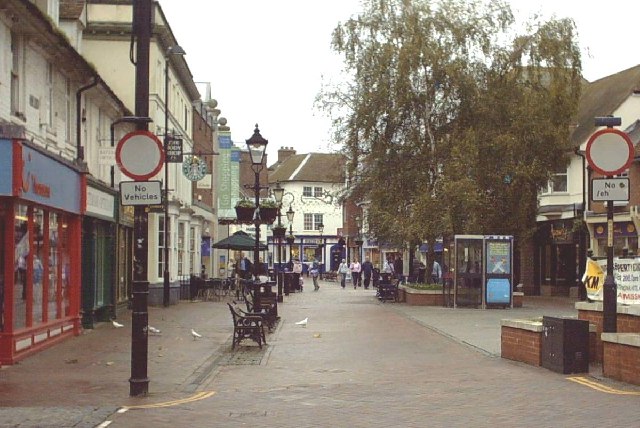
- Adam Colton. Hero image: Ashford Town Centre - Upper High Street - geograph.org.uk - 74845.jpg. Wikimedia Commons · CC BY-SA 2.0.Image source ↗
Related Sanctuary capabilities
From analysis to implementation.
Discussion
No approved comments yet.