
Key findings
- Pride in Place offers a rare ten-year horizon, but Phase 2 Boards must now convert local priorities into credible four-year plans, payment profiles, governance arrangements and project pipelines.
- Available evaluation evidence supports carefully qualified claims: renovated community assets can contribute to pride in place and user skills, but capital investment alone has not shown rapid, broad change across wider social outcomes.
- The practical dividing line will be whether Boards specify an operator, recurrent-cost model, dependencies and learning measures for each material intervention.
- A two-speed portfolio—early visible improvements alongside properly resourced development of complex projects—offers a better balance between delivery momentum and long-term value.
- Community engagement is most valuable when it changes choices about allocation, sequencing and design, rather than serving as evidence of procedural compliance.
The real Phase 2 test is whether places can operate what they fund
Pride in Place arrives at a consequential point for local regeneration in the UK. Many places face interlocking pressures: weakened high streets, underused buildings, fragile community infrastructure, limited routes into work and low confidence that public investment produces durable change. The programme’s scale and duration create an opportunity to address these problems with more patience than a conventional short grant round. Yet the immediate Phase 2 task is compressed. By 30 November 2026, 160 Neighbourhood Boards are expected to submit plans that translate a ten-year vision into a four-year investment plan, payment profile, project pipeline and governance proposition.
The programme covers 284 communities and provides funding and support of up to £20 million per place over ten years, within a wider allocation of up to £5.8 billion. That is substantial scope, but it is not a guarantee of local impact. The central question is whether each place can convert investment into functioning local capacity: organisations able to manage buildings, commission services, support enterprise, maintain public space, respond to demand and sustain partnerships after capital works are complete. (Ministry of Housing, Communities and Local Government, 2026) ↗
**Sanctuary assessment.** The likely fault line is not between ambitious and unambitious plans. Most Boards will have no shortage of credible local priorities. It is between plans that make operating arrangements visible and those that treat delivery as an implicit consequence of approval. A refurbished building still needs programming, safeguarding, maintenance, insurance, marketing and, where relevant, income management. A renewed market or high street needs traders, active management and a reason for people to return. A skills or enterprise offer needs trusted referral routes and an accountable organisation able to adapt it.
This matters because the programme’s delivery framework creates a near-term mobilisation challenge. Phase 2 areas received early revenue funding in 2025/26, followed by 2026/27 revenue and capital funding. Boards are also expected to spend at least 25% of their cumulative allocation within each investment period; the first runs from 2026/27 to 2029/30. Early spending discipline can usefully prevent drift, but it can also create pressure to prioritise projects that are simple to contract over projects that are most likely to produce lasting value. (Ministry of Housing, Communities and Local Government, 2026) ↗
The practical response is a two-speed portfolio. Boards should pursue a limited set of early, visible improvements where need, ownership and maintenance are clear. In parallel, they should fund the development work that complex projects require: surveys, options appraisal, legal and planning work, leases, operator selection, financial modelling and community due diligence. That is not delay. It is a way of avoiding expensive commitments before the conditions for operation exist.
What the available evidence does—and does not—allow Boards to claim
The case for investment in community assets should be made with more precision than regeneration rhetoric often permits. The UK Shared Prosperity Fund evaluation found medium-strength evidence that renovation of community buildings contributed to an increase in pride in place of around four percentage points among local residents, alongside higher skills outcomes among users. However, it found no statistically significant short-term changes, measured three to twelve months after completion, in several wider outcomes, including local-area satisfaction, social cohesion, loneliness and facility use. (Department for Levelling Up, Housing and Communities, 2026) ↗
This is not evidence that capital investment is ineffective. It is evidence that its effects are specific, contingent and often slower-moving than project narratives imply. A well-used community building may improve confidence, learning or local pride; it does not automatically alter the wider conditions that shape health, trust, employment or town-centre vitality. Outcomes will depend on the building’s location, accessibility, offer, operator, relationship to other services and the needs of people who do not already participate.
The interim Community Ownership Fund evaluation reinforces the mechanism. It finds that capital support alone is insufficient and that groups benefit from support to acquire, renovate and sustain assets. It also identifies gaps in grant-application and business-development expertise. (Department for Levelling Up, Housing and Communities, 2025) ↗ Taken together, the two evaluations suggest a clear proposition for Pride in Place: an asset can be a platform for local value, but only if capability and revenue arrangements convert it into regular activity, participation and opportunity.
There is an important counterargument. Requiring detailed operating models too early can privilege places with established anchor institutions and professional capacity, while excluding less organised communities from transformative investment. That risk is real. The answer is not to lower the test of viability or transfer unmanaged risk to voluntary groups. It is to use early programme funding to build local capability and resolve uncertainty in stages. Delivery guidance explicitly permits technical advice, plan development, planning and legal work, alongside work to establish sustainable organisational forms. (Ministry of Housing, Communities and Local Government, 2026) ↗
**Sanctuary interpretation.** “Community-led” should mean that residents have meaningful influence over diagnosis, priorities and trade-offs. It should not mean that communities are left alone to absorb property, procurement, governance and revenue risk. Strong plans will combine local legitimacy with access to the technical expertise needed to make a commitment durable.
Four indicators of a credible plan
The Phase 2 plan questions require Boards to address engagement, a ten-year vision, a four-year investment plan, payment profile, projects, management costs and support needs. These are not merely form-filling requirements. Read together, they point to four practical tests of delivery maturity. (Ministry of Housing, Communities and Local Government, 2026) ↗
**First, can the Board show that engagement changed decisions?** The prospectus calls for broad, deep and sustained engagement. A robust account should identify where participation altered the choice, scale, location, design or sequencing of an intervention. Attendance numbers alone are a weak proxy for influence. This is especially important where plans involve trade-offs between high-street investment, neighbourhood facilities, youth provision, public realm and support for local enterprise. (Ministry of Housing, Communities and Local Government, 2026) ↗
**Second, is there a named operating route for each material asset or service?** Before committing to a building, market, workspace, public space or multi-service hub, Boards should identify the likely operator, management responsibilities, subsidy or income logic, maintenance liability and fallback position if demand is weaker than expected. If these matters remain unresolved, the honest proposition is a time-bound development stage, with a decision gate, rather than an implied readiness that does not exist.
**Third, does the spend profile reflect dependencies rather than optimism?** Property reuse and service integration can require consents, land agreements, procurement, partner commitments and staffing before construction or launch. A plan that exposes those dependencies is more credible than one that accelerates capital spend at the expense of feasibility. The test is not whether every pound is committed quickly; it is whether the sequence protects both momentum and the quality of the eventual operating model.
**Fourth, can the Board learn before it has committed too much?** The government’s local growth evaluation strategy recognises the methodological difficulty of attributing area-based change and uses a combination of intervention studies, surveys, case studies and programme-level analysis. (Department for Levelling Up, Housing and Communities, 2024) ↗ Boards should therefore avoid promising a simple causal line from individual projects to broad regeneration outcomes. A small, usable baseline is more valuable: resident perceptions, use of key spaces, vacancy or occupancy where relevant, participation, local supplier engagement and the operational performance of supported assets. These measures should inform public Board decisions, not disappear into compliance reporting.
How local economic value is created—or lost
The operating-capacity argument has direct implications for SMEs, high streets and employability. Capital works create local economic value only through the activity they enable. A renewed public space may support markets, events and longer dwell time, but only if it is managed, programmed and linked to traders’ needs. A repurposed property may provide workspace, training or community services, but only if access, pricing, referral pathways and tenant support match demand. Procurement can benefit local firms, but one-off contracts do not automatically build supplier capability or create repeat trading opportunities.
This mechanism also clarifies why footfall is an incomplete measure of success. More people passing through a centre may be useful, yet it does not establish whether local businesses are trading better, residents can access services, people are progressing into work or a local organisation has become more resilient. Boards should distinguish activity metrics from local conversion: the share of investment that translates into repeat use, viable trading, skills progression, volunteering, safer shared space or a stronger local operating institution.
Three broad scenarios follow. In the **base case**, most Boards secure approval and deliver practical, popular improvements, but institutional depth remains uneven. Places with mature partnerships, suitable property and established delivery organisations progress more rapidly, while others concentrate on lower-complexity projects as larger schemes develop. In the **upside case**, early investment deliberately builds capability: an asset becomes a platform for advice, learning, microbusinesses and community activity; public-realm works are paired with market or events management; and local procurement is linked to mentoring or supplier development. In the **downside case**, capital commitments outrun governance, operating and revenue capacity, leaving completed assets with fragile use and unclear responsibility.
These are analytical scenarios, not programme forecasts. Their purpose is to show where Board choices can affect outcomes. The available evidence does not support a claim that every asset must generate commercial income. Some interventions will rightly require ongoing subsidy because they address isolation, youth opportunity, safety or access. But a decision to subsidise should be explicit: who will meet the recurrent cost, on what basis and for how long?
A submission discipline for the first four years
**Sanctuary recommendation.** Before submission, Boards should apply five questions to every significant intervention.
**Problem:** What precise constraint is being addressed, for whom, and why is this option preferable to the alternatives?
**User:** Who is expected to use it, how often, and what barriers relating to cost, safety, transport, language, confidence, disability or opening hours could exclude intended beneficiaries?
**Operator:** Which organisation will run it day to day? Where an operator is not yet identified, what funded process will appoint one and by when?
**Economics:** What are the whole-life costs, likely income where appropriate, subsidy requirement, maintenance liabilities and exposure to lower-than-expected demand?
**Dependencies and learning:** What must happen first—consent, lease, land assembly, procurement, staffing, safeguarding or partner commitment—and what leading indicator will trigger adaptation if the intervention is not working?
This framework does not turn democratic local choice into a spreadsheet exercise. It makes the consequences of those choices visible. It also gives Boards a defensible basis for choosing development funding before capital commitment where uncertainty is high.
The November deadline should therefore be treated as the point at which a place establishes its operating proposition, not as the moment it claims certainty about the next decade. The best plans will be specific about the first four years, candid about unresolved dependencies and equipped to learn from early delivery. Pride in Place’s long horizon is valuable precisely because it can support trust-building, asset development, enterprise support and governance maturation. By 2030, the meaningful distinction is unlikely to be between places that spent most quickly and those that did not. It will be between places that used early funding to create local systems able to sustain value, and those that funded projects without securing the capacity to make them endure.
Research foundation
References
- Ministry of Housing, Communities and Local Government (2026). Pride in Place Programme: prospectus. GOV.UK.Source ↗
- Ministry of Housing, Communities and Local Government (2026). Pride in Place programme: delivery guidance. GOV.UK.Source ↗
- Ministry of Housing, Communities and Local Government (2026). Pride in Place Programme: Phase 2 Plan form questions. GOV.UK.Source ↗
- Ministry of Housing, Communities and Local Government (2026). UKSPF intervention-level evaluation final findings report: support for communities and place – executive summary. GOV.UK.Source ↗
- Department for Levelling Up, Housing and Communities (2025). Community Ownership Fund evaluation: interim report. GOV.UK.Source ↗
- Department for Levelling Up, Housing and Communities (2024). Local growth programmes evaluation strategy. GOV.UK.Source ↗
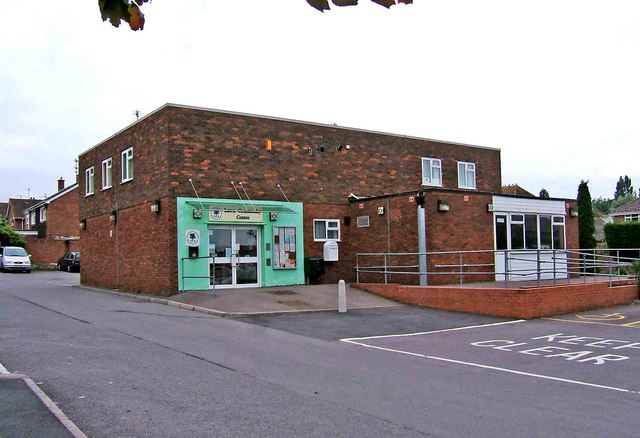
- P L Chadwick. Hero image: Community Centre, Guildford Avenue, Lawn - geograph.org.uk - 932371.jpg. Wikimedia Commons · CC BY-SA 2.0.Image source ↗
Related Sanctuary capabilities
From analysis to implementation.
Discussion
No approved comments yet.