
Key findings
- The central case is selective resilience: the Bank of England expects household-consumption growth to slow from 1.0% in 2026 to 0.8% in 2027, while real post-tax labour-income growth remains modest. Retailers should therefore plan for constrained but active consumers, not a uniform rebound. [[boe_mpr_july2026]]
- Recent retail strength should be treated cautiously. Sales volumes were stronger over the three months to July, but July fell after promotional activity appears to have pulled some demand forward into June. The key commercial question is whether sales are incremental after margin, fulfilment and cannibalisation—not whether a promotion temporarily l
- Format divergence is meaningful but not conclusive: August footfall fell on high streets and in shopping centres while rising at retail parks. This favours retailers that can serve purposeful, convenient journeys, but one month of footfall cannot settle the long-term prospects of physical formats. [[brc_footfall_aug2026]]
- For SMEs and high-street businesses, the response should be operational as well as promotional: organise offers, stock and fulfilment around customer missions; measure contribution rather than revenue alone; and use local strengths in service, collection, expertise and experience where they create a genuine reason to visit.
- The principal risk is a deteriorating value equation. CPI goods inflation increased in July, and many firms expect energy-price pressure to lead to higher prices and lower margins. A renewed cost or confidence shock would expose businesses dependent on discretionary purchases, seasonal inventory and repeated discounting. [[ons_cpi_july2026]] [[boe_
Thesis: a selective consumer economy, not a broad retail recovery
<p><strong>Forecast horizon: September 2026 to August 2027.</strong> UK retail enters autumn with a more difficult problem than simply weak demand. Customers are still buying, but they are increasingly discriminating between purchases that solve an immediate need, offer obvious value or fit a convenient journey, and purchases that can be deferred. That distinction matters because nominal sales growth can conceal discount-led volume, rising fulfilment costs and weaker full-price demand.</p><p>Sanctuary’s base case is selective resilience rather than either a consumer collapse or a broad-based recovery. The Bank of England’s July central projection has household consumption growth slowing from 1.0% in 2026 to 0.8% in 2027. Real post-tax labour-income growth is projected at just 0.1% in 2026 and 0.5% in 2027, with higher inflation and recent mortgage-rate rises weighing on spending. This is not a forecast of an abrupt retrenchment, but it is a thin foundation for a sustained discretionary boom (Bank of England, 2026) ↗.</p><p>The latest retail data support that judgement. Retail-sales volumes rose 1.1% in the three months to July compared with the preceding three months and were 3.0% above a year earlier. Yet volumes fell 0.5% in July following strong May and June outcomes. Retailers cited earlier promotions as one reason demand had been brought forward into June (Office for National Statistics, 2026) ↗. The implication is not that the earlier improvement was unreal. It is that timing, price and promotional calendars may have been as important as an underlying improvement in consumer purchasing power.</p><p><strong>Why this matters now:</strong> retailers that interpret every sales spike as evidence of stronger demand may over-order stock, extend discounts too far or allocate marketing budgets to low-quality acquisition. The stronger operating model will distinguish revenue from contribution, identify which missions are genuinely growing, and preserve the ability to respond if household pressure intensifies.</p>
The autumn starting point: spending exists, but its quality is fragile
<p>August’s indicators show a consumer market that is active but uneven. BRC-KPMG recorded total retail-sales growth of 0.7% year-on-year in the four weeks from 2 to 29 August, below the 12-month average of 1.6%. Food sales rose 2.6%, while non-food sales fell 0.8%. Both store and online non-food sales declined year on year, even as online’s share of non-food sales edged up from 36.0% to 36.4% (British Retail Consortium, 2026) ↗. A rising channel share, therefore, should not be mistaken for a growing market: it can occur when the total category is shrinking more slowly online than offline.</p><p>Consumer confidence provides a modest counterweight, not a decisive upside signal. GfK’s headline measure rose three points to -14 in August, its highest level for two years. But a negative score still means pessimists outnumber optimists (NielsenIQ GfK, 2026) ↗. That combination is consistent with households permitting smaller, planned or useful purchases while remaining cautious about expensive and deferrable commitments.</p><p>The monthly GDP release also reported softer consumer-demand indicators and lower footfall in August, especially in district and local centres and in town and city centres. Less favourable weather was identified as a factor, which is an important warning against turning a short-run movement into a structural conclusion (Office for National Statistics, 2026) ↗. Nonetheless, the direction of travel is commercially relevant: retailers should not extrapolate either June’s promotion-supported strength or August’s soft non-food result as a settled trend.</p><p><strong>Sanctuary interpretation:</strong> demand is likely to be volatile around a low-growth baseline. The winning proposition will make the value exchange easy to understand—whether that value is price, durability, convenience, trusted advice, immediate availability or a better service outcome. Undifferentiated discretionary choice is likely to face the greatest pressure.</p>
Format divergence: retail parks have an edge, but not a permanent verdict
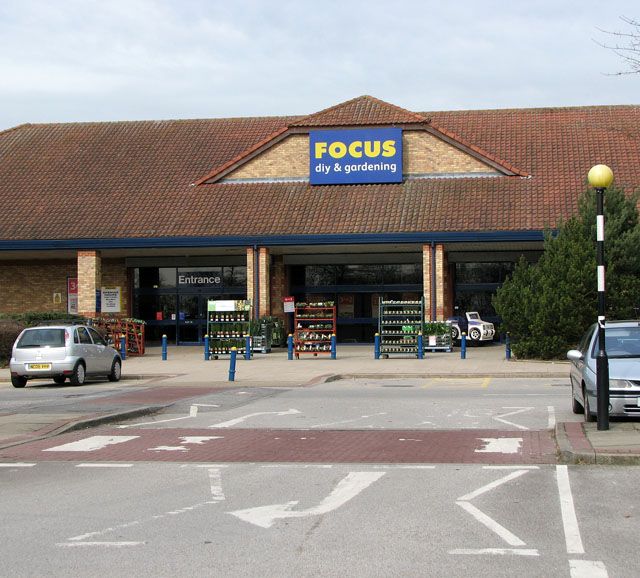
<p>The sharpest current divergence is between physical formats. Total UK footfall was down 1.7% year-on-year in August; high-street footfall fell 3.1% and shopping-centre footfall fell 0.5%, while retail-park footfall rose 1.0% (British Retail Consortium, 2026) ↗. The evidence is one month of footfall data, not proof of a permanent hierarchy. Weather exposure, catchment characteristics, tenant mix and local events all affect visits.</p><p>Even so, the pattern has a credible economic mechanism. In a cautious market, consumers may consolidate purchases into purposeful trips that combine food shopping, bulky goods, comparison shopping and value-led retailers. Parking, ease of collection and the ability to complete several tasks in one journey can reduce the non-price cost of shopping. Retail parks are often better configured for these missions than traditional comparison-and-browse trips.</p><p>This is not an argument that high streets are obsolete, nor that online is an automatic hedge. August online non-food sales were also down year on year, despite the small rise in online penetration (British Retail Consortium, 2026) ↗. High streets can remain resilient where they offer convenience, food and leisure, specialist expertise, repair and service, local relevance, or a distinctive experience that cannot be replicated by an interchangeable transaction.</p><p><strong>Practical implication for SMEs and place-based retailers:</strong> plan around customer missions rather than channel labels. For replenishment, urgent problem-solving, research and comparison, collection, browsing, socialising and seasonal purchasing, ask four questions: what makes the journey worthwhile; which fulfilment route is preferred; what does it cost to serve; and where does a price incentive add value rather than merely subsidise an existing purchase? This turns “high street versus online” into a more useful management question about local customer needs and profitable fulfilment.</p>
Promotion is a demand-timing tool—and a margin risk
<p>The price environment leaves little room for complacency. CPI inflation was 2.9% in the year to July, up from 2.6% in June; goods inflation rose from 1.7% to 2.2%, while core CPI stood at 2.6% (Office for National Statistics, 2026) ↗. These are economy-wide measures rather than a category-level retail cost forecast. But they demonstrate that the operating environment is not yet uniformly benign.</p><p>Forward-looking business evidence points to a further trade-off. In the Bank of England’s August Decision Maker Panel, 59% of firms expected higher energy prices to lead them to raise prices over the next 12 months, while 61% expected lower profit margins. The panel covers firms across the economy, so it cannot be read as a retail-margin prediction. It is, however, a relevant signal that many businesses expect to absorb at least part of renewed cost pressure (Bank of England, 2026) ↗.</p><p>Against that backdrop, blanket discounting is a particularly weak response to soft trading. The July retail-sales data show why: promotions can shift a purchase between weeks rather than create a new purchase (Office for National Statistics, 2026) ↗. The immediate margin cost is only part of the risk. Repeated, broad offers can increase later promotional dependence, train customers to wait for reductions and leave retailers with a less reliable full-price reference point.</p><p><strong>Sanctuary recommendation:</strong> replace “did the campaign lift sales?” with four tests. Did it generate incremental contribution after discount, fulfilment and returns? Did it recruit or reactivate a customer likely to be valuable over the relevant buying cycle? Did it cannibalise a probable full-price sale? Did it reduce genuine stock risk before the next buying decision? This favours legible value architecture—good, better and best ranges; bundles that solve a real mission; carefully targeted replenishment offers; and tightly governed clearance—over permanent sitewide promotions.</p>
Marketing and management capability: protect learning, tighten the decision rule
<p>Marketing investment has not collapsed, despite a tougher trading environment. IPA Bellwether reported a net balance of +6.9% of surveyed firms revising total marketing budgets upward in the second quarter of 2026, after +7.3% in the first quarter. At the same time, the net balance for firms’ own financial prospects deteriorated to -9.6% (Institute of Practitioners in Advertising, 2026) ↗. This is cross-sector evidence, not a prescription for every retailer to increase spend or select a particular channel.</p><p>The more useful reading is that businesses are trying to sustain demand while becoming less certain about the economic backdrop. That makes the allocation rule more important than the headline budget. Retailers need both short-term conversion activity and activity that maintains awareness, trust and future demand; treating all expenditure as if it should produce immediate last-click revenue will understate the role of brand memory and overstate the apparent efficiency of heavily discounted conversion.</p><p>For a large retailer, that may mean formal incrementality tests and cohort analysis. For an independent business, the equivalent can be much simpler: a 90-day dashboard showing campaign-level contribution, new versus returning customers, redemption and return rates, repeat purchase where relevant, and store or collection effects. The management discipline matters more than an expensive attribution platform.</p><p>This is also a productivity issue. Better demand measurement reduces wasted stock, unproductive media spend and costly fulfilment choices. For high-street firms, it can reveal where local service, appointment-based selling, click-and-collect, repair, community partnerships or staff expertise create economic value that a generic online discount cannot. In a constrained consumer market, these operational advantages can be more durable than a temporary price cut.</p>
Scenarios and the indicators that should change the plan
<p><strong>Base case — selective resilience and promotion sensitivity.</strong> Household spending grows slowly, while discretionary non-food demand remains uneven. Businesses serving convenient, purposeful journeys and presenting clear value outperform those reliant on undifferentiated browsing or continuous discounting. This is consistent with subdued consumption projections and the current format split in footfall (Bank of England, 2026) ↗ (British Retail Consortium, 2026) ↗.</p><p><strong>Upside case — deferred demand is released.</strong> A more sustained easing in energy and fuel pressure, lower mortgage burdens, softer inflation and improving confidence could release postponed major purchases. The important confirmation would not be nominal sales growth alone. It would be several months of volume improvement in discretionary categories without an exceptional increase in promotional intensity, alongside stronger high-street visits and major-purchase confidence.</p><p><strong>Downside case — a cost shock meets a cautious consumer.</strong> Renewed energy or fuel pressure, more persistent inflation or a deterioration in confidence would squeeze real incomes and intensify defensive pricing. Exposure would be greatest for seasonal, discretionary and high-return categories, and for businesses whose economics depend on town-centre browsing without a clear visit proposition. Uncertainty around the scale and duration of energy-price effects remains material in the Bank’s assessment (Bank of England, 2026) ↗.</p><p>Management teams should monitor retail-sales volumes alongside discount depth and timing; non-food sales and online penetration together rather than separately; footfall by format; confidence measures, particularly major-purchase sentiment; and energy- and fuel-cost developments. Upgrade the outlook only if volume growth broadens without deeper discounting. Downgrade it if sales soften while promotional intensity rises, or if cost concerns coincide with a sustained fall in confidence.</p><p><strong>Bottom line:</strong> the task is not to predict one national consumer mood. It is to build a retail model that serves distinct customer missions profitably when consumers remain willing to spend, but less willing to accept friction, unclear value or a purchase they can safely postpone.</p>
Research foundation
References
- Bank of England (2026). Monetary Policy Report – July 2026. Bank of England.Source ↗
- Office for National Statistics (2026). Retail sales, Great Britain: July 2026. Office for National Statistics.Source ↗
- British Retail Consortium (2026). Consumer demand cools as summer ends. British Retail Consortium.Source ↗
- British Retail Consortium (2026). Sluggish footfall shows why retail needs Budget boost. British Retail Consortium.Source ↗
- Office for National Statistics (2026). GDP monthly estimate, UK: July 2026. Office for National Statistics.Source ↗
- NielsenIQ (2026). Headline score up three points to -14 in August. NielsenIQ.Source ↗
- Office for National Statistics (2026). Consumer price inflation, UK: July 2026. Office for National Statistics.Source ↗
- Bank of England (2026). Monthly Decision Maker Panel data – August 2026. Bank of England.Source ↗
- Institute of Practitioners in Advertising (2026). UK companies revise marketing budgets up in Q2 2026 despite tough economic conditions. Institute of Practitioners in Advertising.Source ↗
- Evelyn Simak. Hero image: Forest Retail Park - entrance to Focus - geograph.org.uk - 1758481.jpg. Wikimedia Commons · CC BY-SA 2.0.Image source ↗
Related Sanctuary capabilities
From analysis to implementation.
Discussion
No approved comments yet.