
Key findings
- PPN 002 makes social value a scored and managed part of relevant central-government procurement, but a weighting alone does not ensure credible delivery.
- The central risk is an access paradox: large suppliers can win on well-presented social-value commitments while VCSEs and social enterprises face prohibitive bid costs, contract size, risk transfer and cash-flow demands.
- Evidence from UK anchor institutions suggests that social procurement is strongest when procurement strategy, supplier capability, contract management and performance assessment operate together.
- Commissioners should test access as a delivery condition: identify where specialist local capability is material, then design proportionate routes, funded partnerships and enforceable delivery arrangements.
- Good measurement needs both contractual evidence of delivery and qualitative learning about outcomes, attribution and what communities experienced.
The thesis: social value is only as credible as its route to delivery
PPN 002 has moved social value beyond a discretionary statement of intent for in-scope central-government procurements. For procurements commenced on or after 1 October 2025, it requires a minimum 10% social-value weighting where social value is relevant and proportionate. It also expects successful commitments to be reflected in the contract through terms, KPIs or performance indicators (Cabinet Office, 2025)↗.
That is a consequential change. It gives commercial teams a clearer incentive to assess social-value offers and gives contract managers a basis for following through after award. But it also shifts the substantive question. The test is no longer whether a bidder can write a persuasive answer to a social-value question. It is whether the procurement creates a plausible route from a scored commitment to outcomes for people and places.
This matters particularly for employability, enterprise support, community safety and high-street renewal. Outcomes in these fields often depend on trusted local relationships, knowledge of barriers facing particular groups, referral networks and the ability to adapt support as circumstances change. Those capabilities may sit with small charities, community organisations and social enterprises rather than with the prime contractor holding the largest contract.
The policy itself points beyond tender evaluation. Its guidance asks buyers to consider local priorities, supply-market characteristics, early market engagement, appropriate KPIs and management of commitments over the contract lifecycle. It also distinguishes additional social value from the core deliverable: a supplier should not simply relabel what it is already contracted to provide as an extra benefit (Cabinet Office, 2025)↗.
Sanctuary’s interpretation is that market access is not a peripheral fairness issue. Where locally rooted organisations hold material delivery capability, access is part of the infrastructure required to deliver social value at all.
The access paradox: high-scoring commitments can coexist with exclusion
A procurement can score social value rigorously and still exclude the organisations best positioned to deliver it. A large supplier may offer quantified commitments, established reporting systems and national assurance capacity. At the same time, a local VCSE may be unable to meet a high financial threshold, absorb delayed payments, finance bid development, secure the required insurance, or take on delivery risk through a lightly specified subcontract.
Government research on VCSE participation identifies constraints on both sides of the market. VCSEs may lack the capacity to bid or scale, while commissioners may not have a strong picture of local capability. The research also identifies contract design, including overly large, broad or unrealistic contracts, as a significant barrier to participation (Cabinet Office, 2022)↗. PPN 002 correspondingly directs in-scope organisations to avoid unnecessary burdens on suppliers and to have regard to barriers faced by SMEs and VCSEs (Cabinet Office, 2025)↗.
This is not an argument that every contract should be divided into smaller lots or awarded directly to small organisations. Aggregation can reduce commissioning transaction costs, support consistent safeguarding and data standards, and give complex programmes the resilience of a larger provider. In some services, a national or regional integrator is the sensible delivery model.
The weakness arises when those advantages are assumed rather than tested against the delivery model. If a programme relies on trusted neighbourhood outreach, specialist employment support or local business networks, a large contract can weaken delivery by making those relationships an unfunded add-on. The prime may retain accountability while the community partner carries uncertain referrals, thin margins and little influence over delivery decisions.
Research offers reasons for this caution, rather than proof that every large procurement fails. A study of social-procurement policy from an ecosystem perspective found that bureaucratic practice, centralised rules and short-term incentives could inhibit value creation across the wider delivery system (Roy et al., 2024)↗. Earlier research on social-enterprise policy found a gap between policy claims and operational support shaped by local interpretation and organisational culture (Mazzei and Roy, 2017)↗. Both studies are context-specific, but together they support a practical warning: formal compliance is not evidence that a market is accessible or that a partnership is viable.
Why access should be treated as a delivery capability
The strongest available evidence suggests that social procurement works through an organisational system, not a single award criterion. A cross-case study of 17 UK anchor institutions found that strategic social procurement combined procurement strategy with inter-organisational structures, supplier-management practices, capability development and performance assessment. It also found widespread use of KPIs alongside persistent problems in data availability and impact measurement (Selviaridis et al., 2023)↗.
That finding clarifies the mechanism. A social enterprise named in a winning tender does not automatically acquire the conditions to deliver a progression pathway, apprenticeship route or business-support offer. It needs a funded role, agreed referral flows, timely information sharing, proportionate safeguarding and reporting requirements, realistic payment terms and a route to resolve operational problems. Without these, the named partnership may function principally as bid evidence.
The economic implications are wider than VCSE participation. SMEs and social enterprises often contribute local intelligence, supplier diversity and routes into work or entrepreneurship that larger contractors cannot easily reproduce. Where their contribution is material, poor subcontracting design can diminish local economic value even if the prime delivers its headline outputs. Conversely, requiring a small organisation to carry disproportionate risk can damage the capability that commissioners are trying to draw on.
There is uncertainty here. Local organisations vary greatly in governance, financial resilience and readiness for public contracts; some will not want, or be able, to take on a larger role. Commissioners should therefore avoid romanticising smallness. The relevant question is functional: what capability is needed to achieve the stated outcome, who holds it, and what commercial arrangement enables it to be used responsibly?
This is also where the distinction between policy scope and good practice matters. PPN 002 governs in-scope central-government contracting, not every local authority or anchor-institution procurement. Yet its underlying discipline—relevance, proportionality, early engagement and managed commitments—offers a useful standard for any organisation seeking social value from its spend.
A Sanctuary access-and-delivery test for procurement design
The practical response is not to add another generic question to an invitation to tender. It is to assess, before the procurement strategy is fixed, whether access to specialist local capability is a condition of successful delivery.
**Evidence base.** PPN 002 guidance places emphasis on market engagement, consideration of market characteristics and proportionate performance management. Research on anchor institutions indicates that capability development and supplier management are integral to strategic social procurement, not optional extras after contract award (Cabinet Office, 2025; Selviaridis et al., 2023)↗↗.
**Sanctuary recommendation.** Where social value is material, commissioners should apply five tests:
1. **Need and place.** Define the intended outcome, participant group and geography before choosing a social-value theme. A generic commitment to jobs or volunteering is weak if it has no connection to the contract, local need or a credible delivery mechanism.
2. **Market reality.** Engage VCSEs, social enterprises, SMEs and potential prime contractors early. Test whether lot structure, turnover thresholds, insurance, data requirements, mobilisation periods and payment terms are proportionate. Separate discussions as well as joint sessions can reveal power imbalances that a single supplier event conceals.
3. **Route to capability.** Where a local specialist contribution is necessary, make a deliberate choice about the route: smaller lots, a consortium, a framework arrangement, or a transparently governed subcontracting model. The appropriate option will depend on the service and market; it should not be selected solely for administrative convenience.
4. **Delivery economics.** Identify who pays for partnership coordination, mobilisation, monitoring and working capital. Specify referral responsibilities and payment timing. A partnership without funded time, predictable income or influence over delivery is not a robust delivery model.
5. **Contractual assurance.** Translate material commitments into a concise schedule: deliverable, target group, place, timescale, accountable organisation, evidence source and escalation route. This makes the commitment manageable without forcing every local outcome into an artificial metric.
These tests do not reduce scrutiny. They direct scrutiny towards feasibility. They also allow commissioners to distinguish a valuable community partnership from a nominal relationship that adds narrative appeal but little delivery capacity.
Measure delivery without mistaking activity for impact
Social value is vulnerable to two equal and opposite errors. One is metric theatre: long lists of monetised proxies, volunteering hours or outputs presented as conclusive evidence of change. The other is anti-measurement romanticism: the claim that difficult attribution makes structured accountability impossible.
Recent analysis identifies a crowded landscape of social-value frameworks and continuing challenges around subjectivity, attribution and consistency (Shields et al., 2026)↗. These limitations mean that a single financial proxy should not be treated as a precise measure of community benefit. They do not remove the need to establish whether contractual promises were delivered.
PPN 002 guidance supports a more disciplined position. Relevant social-value KPIs or performance indicators should link a deliverable to a numeric element, while permitting proportionate alternatives where a formal KPI is not justified by the market or contract (Cabinet Office, 2025)↗.
Sanctuary recommends three connected layers of evidence:
- **Contractual delivery:** What was delivered, for whom, where and when? This covers activities such as paid placements completed, defined capacity support provided, or accessibility improvements made.
- **Participant and place outcomes:** Did people progress into work, sustain employment, gain a qualification, improve access to a service or report a change they value? Baselines and comparison data should be used where feasible, without claiming that the contract alone caused every observed outcome.
- **System learning:** Which referrals failed, which partnership arrangements worked, and what should change in the next procurement cycle? Structured feedback from delivery partners and participants is essential here.
Traceability is the governing principle. A material claim should be connected to a named activity, a responsible organisation, a plausible mechanism and an evidence source that the commissioner can challenge. That is more credible than either a dashboard full of weak proxies or an untestable account of transformation.
What commissioners, primes and VCSEs should do next
For commissioners, the immediate task is to review the procurements where social value is both material and difficult to deliver. Begin with strategically significant live contracts and forthcoming procurements. Ask whether the chosen outcomes relate to the contract and local need; whether delivery partners were engaged before specifications were fixed; and whether social-value commitments feature in ordinary contract-management discussions rather than only annual reporting.
For prime contractors, the priority is to replace partner naming with partner governance. Before submission where possible, agree the delivery role, funding, information access, payment arrangements and senior contacts for any organisation on which a social-value commitment depends. The social-value schedule should be owned by operational and commercial teams, not left with the bid team after award.
For VCSEs and social enterprises, readiness matters, but it should not mean accepting every risk transferred down the supply chain. Concise evidence on outcomes, safeguarding, governance, delivery geography and referral capacity can make engagement easier. The Home Office SME/VCSE Bid Pack similarly emphasises alignment with published criteria and evidence for measurable social, economic and environmental benefits (Home Office, 2026)↗. Early market engagement is also an opportunity to challenge conditions that are disproportionate to the role being procured.
A practical local response may be a standing social-procurement partnership function involving commissioners, anchor institutions, enterprise support bodies, VCSE infrastructure organisations and businesses. Its value should be judged by concrete effects: a specification changed before publication, an aggregation risk identified, a consortium prepared, or a subcontracting arrangement made viable.
PPN 002 supplies an important lever. It cannot by itself overcome weak market knowledge, poor partnership economics or cursory contract management. Social value becomes credible when commissioners treat access to local capability as part of delivery design—and when suppliers can demonstrate that their commitments have the resources, relationships and accountability required to make a difference.
Research foundation
References
- Cabinet Office (2025). PPN 002: Taking account of social value in the award of central government contracts. GOV.UK.Source ↗
- Cabinet Office (2025). PPN 002 Guide to using the social value model. GOV.UK.Source ↗
- Cabinet Office (2022). The role of Voluntary, Community, and Social Enterprise (VCSE) organisations in public procurement. GOV.UK.Source ↗
- Kostas Selviaridis; Davide Luzzini; Carlos Mena (2023). How strategic public procurement creates social value: Evidence from UK anchor institutions. Public Management Review, 1-29.Source ↗DOI: 10.1080/14719037.2023.2277814
- Michael J. Roy; Andrea Spiesova; Michael Curtin; Renata Suchowerska; Jack Rendall; Kevin Strokosch; Martin Loosemore; Jo Barraket (2024). Exploring value creation from an ecosystem perspective: A critical examination of social procurement policy. Public Money & Management.Source ↗DOI: 10.1080/09540962.2024.2355995
- Micaela Mazzei; Michael J. Roy (2017). From Policy to Practice: Exploring Practitioners’ Perspectives on Social Enterprise Policy Claims. VOLUNTAS: International Journal of Voluntary and Nonprofit Organizations, 28(6), 2449-2468.Source ↗DOI: 10.1007/s11266-017-9856-y
- Paul Shields; Rajkumar Roy; Sanowar Khan; Adam Read; Sarah Ottaway (2026). Social value—are we measuring up?. Public Money & Management, 46(3), 335-340.Source ↗DOI: 10.1080/09540962.2025.2539355
- Home Office (2026). SME/VCSE Bid Pack. GOV.UK.Source ↗
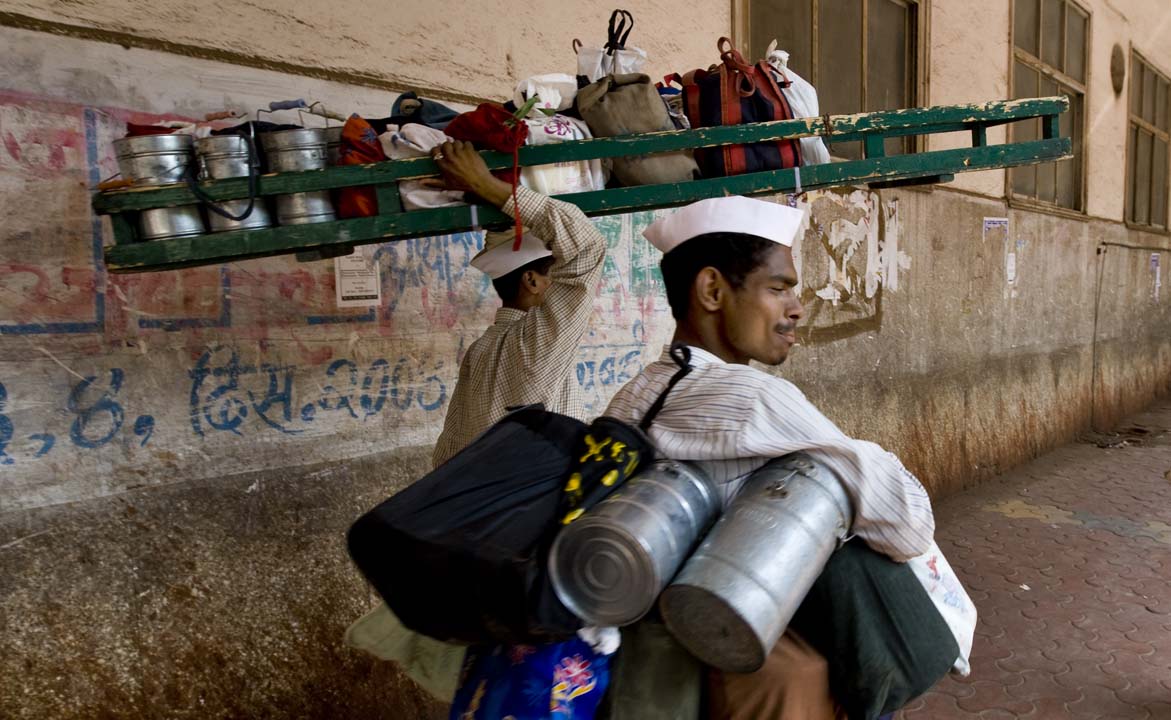
- Steve Evans from Citizen of the World. Hero image: Mumbai Dabbawala or Tiffin Wallahs- 200,000 Tiffin Boxes Delivered Per Day.jpg. Wikimedia Commons · CC BY 2.0.Image source ↗
Related Sanctuary capabilities
From analysis to implementation.
Discussion
No approved comments yet.