
Key findings
- From 1 April 2026, qualifying occupied retail, hospitality and leisure premises in England with rateable values below £500,000 receive multipliers 5p below the equivalent national multipliers. This is a material structural change, but it applies to qualifying properties rather than to all high-street businesses (HM Treasury, 2025) [[hmt2025]].
- The reform replaces the 2025–26 40% retail, hospitality and leisure relief, but a lower multiplier does not guarantee a lower year-on-year bill. Updated rateable values, the end of the previous relief and transitional protections must be assessed together (HM Treasury, 2025) [[hmt2025]].
- Eligibility depends on occupation and the premises’ actual use. Empty properties do not retain the lower retail, hospitality and leisure multiplier once Empty Property Relief ends, making the journey from vacant unit to viable opening a central local implementation issue (HM Treasury, 2025) [[hmt2026]].
- The policy can improve the viability of credible businesses and protect capacity during a period of cost pressure. It cannot itself create demand, resolve vacancy, coordinate landlords or deliver the management capability needed to strengthen a town-centre offer.
- For SMEs, the immediate priority is a property-level review followed by a deliberate decision about how any recurring saving will be used. For local partnerships, success should be measured through viable occupation and trading resilience, not simply the number of properties receiving the lower multiplier.
A stability reform, not a recovery guarantee
England’s new retail, hospitality and leisure (RHL) business-rates multipliers should be judged as a change in the economics of occupation, not as a stand-alone high-street revival programme. That distinction matters now because the reform arrives alongside an uneven trading environment: retail sales volumes in Great Britain rose by 0.9% in the three months to August 2026 and by 2.4% year on year, yet online sales still represented 28.8% of retail spending in August. Those figures do not measure town-centre footfall, hospitality demand or local business survival. They do, however, underline that stronger aggregate retail spending does not automatically translate into healthier physical centres (Office for National Statistics, 2026) ↗.
**Evidence.** From 1 April 2026, qualifying RHL properties in England with rateable values below £51,000 use a 38.2p multiplier, while qualifying properties with rateable values from £51,000 to £499,999 use a 43.0p multiplier. The corresponding national multipliers are 43.2p and 48.0p. Properties with a rateable value of £500,000 or more are subject to the 50.8p high-value multiplier, irrespective of use (HM Treasury, 2025) ↗.
**Interpretation.** The practical gain is greater predictability in one fixed cost. For a business assessing a lease, a refurbishment or an additional member of staff, a continuing differential is easier to model than annual relief renewed at a changing rate. That can be particularly valuable to smaller operators with little room to absorb shocks.
But rates are only one part of the viability equation. A lower multiplier does not repair poor accessibility, weak evening trade, unsuitable unit sizes, safety concerns, fragmented ownership or an undifferentiated local offer. It may make a sound business case more robust; it cannot create a sound business case where demand, property conditions and delivery capacity are absent. The appropriate test is therefore whether places use the reform to improve their operating model, rather than mistake a tax intervention for evidence of recovery.
Why a lower multiplier may not mean a lower bill
The headline that RHL rates are now permanently lower is accurate only in a specific sense: the qualifying multipliers sit 5p below the equivalent national multipliers. It should not be translated into a blanket promise that every former relief recipient will pay less than in 2025–26.
**Evidence.** The new multipliers replace the 40% RHL relief available in 2025–26, which was capped at £110,000 in cash terms per business. The new approach does not have an equivalent cash cap. Government guidance also makes clear that a bill depends on both the rateable value assigned at revaluation and the multiplier applied. A higher rateable value can outweigh the effect of a lower multiplier; a lower valuation can work in the opposite direction. Supporting Small Business Relief may protect eligible businesses from some increases, but it does not remove the need to understand the underlying bill (HM Treasury, 2025) ↗.
**Interpretation.** This is not a technical caveat; it is the policy’s principal management implication. The 2026 revaluation, withdrawal of the previous relief and introduction of new multipliers occur together. A simple comparison between last year’s final payment and this year’s payment risks attributing a change to the wrong cause.
There is also a distributional trade-off. Removing the cash cap can extend the benefit across qualifying properties operated by multi-site businesses, provided each meets the criteria. That may support anchor occupiers, jobs and local supply chains. Equally, it means the reform is not designed solely around independent firms. A town-centre partnership should resist both simplistic conclusions: that chain participation is inherently negative, or that eligibility alone proves local economic value. The better question is whether the mix of occupiers, premises and local purchasing produces a more resilient trading ecosystem.
**Sanctuary recommendation.** Every occupier should maintain a short rates record for each property: 2026 rateable value, multiplier, reliefs or protections, billing authority decision, instalment profile and any query requiring resolution. Comparing 2025–26 and 2026–27 bills should then separate valuation change, the end of RHL relief, the new multiplier and transitional support. This is basic financial control, not merely administrative compliance.
Occupation is the policy’s overlooked boundary
The lower multiplier is not attached to a high street, a landlord or an intended future use. It attaches to a qualifying occupied hereditament — in effect, a rateable property — subject to the statutory conditions.
**Evidence.** Billing authorities determine whether premises qualify. The property must be occupied, fall below the relevant rateable-value threshold and be used wholly or mainly for qualifying retail, hospitality or leisure purposes. In fact-specific cases, authorities may consider factors including floor space, turnover and staffing. Once Empty Property Relief ends, unoccupied premises revert to the national multipliers, even where a prospective occupier intends to use the unit for a qualifying activity (HM Treasury, 2025) ↗.
**Interpretation.** This creates a significant implementation boundary for local growth strategies. A vacant shop cannot benefit simply because it is being marketed to a café, retailer or leisure operator. The lower rate begins when a viable qualifying occupation begins. The period before opening therefore matters disproportionately: property condition, utilities, planning and licensing clarity, lease terms, fit-out finance, recruitment and the ability to launch trading all affect whether a prospective tenant reaches occupation.
Mixed-use occupiers face a related risk. A studio with retail activity, an events space with food sales or a community venue with commercial income should not assume that its own description of the business settles the rates position. The relevant question is the actual main use of the premises. Businesses should document that use and seek clarification from the billing authority early where it is uncertain. This is an operational precaution rather than legal advice, but it can prevent a classification dispute becoming a cash-flow problem.
The wider lesson is that vacancy reduction is not achieved by eligibility alone. The multiplier can improve the economics after occupation; local institutions still need to reduce the practical friction that prevents credible occupiers from opening in the first place.
Scale, local finance and the limits of the fiscal mechanism
The reform is large enough to matter nationally, but its scale should not be confused with proof of local impact.
**Evidence.** Government estimates that more than 750,000 hereditaments benefit from the RHL multipliers, from a 2026 rating list containing 2.01 million hereditaments. It estimates that more than 35,000 pubs will share a £210 million reduction in bills over 2026–27 to 2028–29, and that nearly 30,000 restaurants will share a £180 million benefit over the same period. At the other end of the policy, just over 21,000 properties are within scope of the high-value multiplier; around 1,900 distribution warehouses are estimated to contribute more, raising an additional £270 million across the same three years (HM Treasury, 2025) ↗.
Government’s business-rates retention proposals provide for section 31 grant compensation for the impact of the lower multipliers on local authorities’ retained business-rates income, alongside treatment of additional high-value-multiplier income within the wider system (Ministry of Housing, Communities and Local Government, 2025) ↗.
**Interpretation.** These figures establish that the policy is more than a symbolic gesture. They do not establish that tax savings will be reinvested in local places. For many operators, using the benefit to absorb energy, finance, wage or supplier-cost pressure will be an entirely rational outcome. Avoiding closure is valuable, but survival is not the same as regeneration.
Nor should councils or business partnerships assume that a lower rates burden automatically creates a new local operations budget. Compensation addresses the fiscal consequences of a national tax-policy choice; it is not the same as a ring-fenced fund for cleansing, events, safety, business support or centre management. Places that want better outcomes will still need an accountable mechanism for coordinating property owners, businesses, public services and community organisations.
A fair counterargument is that fiscal policy should not be asked to solve every local problem. That is correct. The value of the multiplier is narrower but still meaningful: it can improve the viability of businesses that already have a credible proposition. The analytical error is to claim more for it than that.
Turning rates predictability into local economic value
The strongest response separates the technical task of securing the right bill from the commercial task of using any headroom well.
**Sanctuary recommendation for SMEs.** First, verify the property position rather than relying on a headline saving. Second, decide what constraint any recurring saving is intended to ease. For one business, the right use may be a contribution-margin buffer that protects employment. For another, it may be a modest fit-out, clearer signage, staff capability, customer-retention activity or improved ordering systems. Dispersing a small saving across unrelated costs is unlikely to change performance. Selecting one constraint that is visible in the business’s own trading data is more defensible.
**Sanctuary recommendation for landlords and place partnerships.** Focus on the pre-opening bottleneck. Produce accurate property packs, realistic condition information and clear routes through approvals; coordinate referrals for fit-out, utilities and local suppliers; and make temporary or meanwhile use a route towards viable occupation rather than an end in itself. These interventions do not alter the multiplier, but they determine whether an eligible business can reach the point at which the multiplier applies.
**Sanctuary recommendation for councils and BIDs.** Track a conversion pathway rather than treating the count of qualifying hereditaments as the outcome. A quarterly dashboard could follow: vacant-to-let time; let-to-open time; openings still trading after six months; daytime and evening offer gaps; and local procurement opportunities. Rates eligibility belongs in that dashboard as a diagnostic field. It should not become the definition of success.
This approach also makes responsibilities clearer. The billing authority determines eligibility. The business makes commercial choices. Landlords control property readiness and lease terms. Local partnerships coordinate the conditions that no single occupier can provide. A multiplier can support occupancy, but only this wider operating model can turn occupancy into durable local value.
What should success look like by spring 2027?
The administrative baseline is straightforward: qualifying businesses should receive the correct multiplier promptly and understand how their bill has been calculated. A more meaningful assessment goes further.
Success by spring 2027 would mean fewer viable occupiers delayed by avoidable uncertainty; more businesses able to use predictable property costs to sustain or improve a differentiated offer; and faster conversion of suitable vacant units into durable trading. None of these outcomes can be inferred from retail-sales data or from the number of properties in scope. They require place-level observation.
The downside case is equally plausible. Savings may be absorbed by operating pressure while vacancies, weak demand and fragmented local delivery remain unchanged. That would not show that the multiplier had failed at its proper task. It would show that it had been expected to perform functions that fiscal design cannot perform alone.
The strategic shift for high streets is therefore from viewing rates relief as rescue to treating rates predictability as deployable capacity. The places most likely to gain are those that pair that capacity with business diagnosis, property readiness and practical coordination around a credible local offer.
Research foundation
References
- HM Treasury (2025). Effects of the business rates retail, hospitality and leisure multipliers and high-value multiplier. GOV.UK.Source ↗
- HM Treasury (2025). Business Rates Multipliers: Qualifying Retail, Hospitality or Leisure. GOV.UK.Source ↗
- Office for National Statistics (2026). Retail sales, Great Britain: August 2026. GOV.UK / Office for National Statistics.Source ↗
- Ministry of Housing, Communities and Local Government (2025). Resetting the business rates retention system from 1 April 2026. GOV.UK.Source ↗
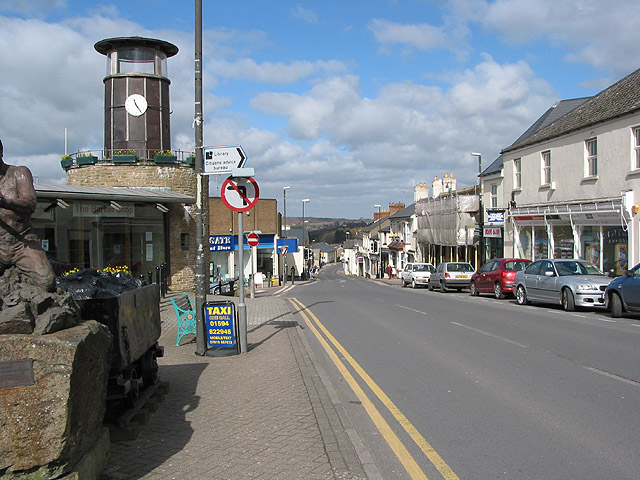
- Pauline Eccles. Hero image: High Street, Cinderford - geograph.org.uk - 728568.jpg. Wikimedia Commons · CC BY-SA 2.0.Image source ↗
Related Sanctuary capabilities
From analysis to implementation.
Discussion
No approved comments yet.