
Key findings
- Great Britain retail sales volumes rose 0.9% in the three months to August 2026 and 2.4% year on year, while UK retail footfall fell 2.9% year on year in September. This divergence supports a conversion-led strategy, but does not establish a uniform retail recovery. (ONS, 2026) [[ons-retail-aug-2026]] (British Retail Consortium, 2026) [[brc-footfal
- Household pressure has eased in some areas but remains salient: CPI inflation was 3.1% in August, 61% of adults reported being worried about rising living costs in July, and consumer confidence remained negative at -13 in September. Value, price trust and disciplined promotions therefore remain central. (ONS, 2026) [[ons-cpi-aug-2026]] (ONS, 2026)
- Online spending values were 10.1% higher year on year in the three months to August, with online accounting for 28.8% of retail spending in August. Stores need a defined role in an increasingly mixed customer journey rather than being assessed as isolated transaction sites. (ONS, 2026) [[ons-retail-aug-2026]]
- Advertising investment rose 9.3% year on year in Q1 2026, while retail media grew 17.9%. That is not a direct measure of retailers’ acquisition costs, but it raises the premium on first-party relationships, incrementality testing and offers that protect margin. (Advertising Association and WARC, 2026) [[aawarc-q1-2026]]
The forecast thesis: sales resilience does not mean traffic has recovered
**Forecast horizon: October 2026 to April 2028.** The useful reading of current UK retail data is neither that the consumer has fully recovered nor that demand has collapsed. It is that spending, visits and channel choice are moving differently. Great Britain retail sales volumes rose 0.9% in the three months to August 2026 and were 2.4% above the same period a year earlier. Yet UK retail footfall was 2.9% lower year on year in September, including falls of 3.0% on high streets and 3.5% in shopping centres. (ONS, 2026) ↗ (British Retail Consortium, 2026) ↗
Those measures are not interchangeable: retail sales volumes and footfall cover different populations, geographies and time periods. Nor does the divergence prove that every store is under pressure. It does, however, challenge a familiar planning assumption: that a better sales environment will naturally restore enough ambient traffic to support an estate built around passive browsing.
**Sanctuary’s interpretation** is that the central management task through April 2028 is to increase contribution per customer interaction, rather than pursue visits as an end in themselves. Contribution should mean margin after discounts, fulfilment, returns, paid media, staffing and other costs required to serve the sale. Under this lens, a store can be valuable even with lower walk-in traffic if it improves assisted conversion, collection, service, returns recovery, local availability or repeat purchase. Conversely, traffic growth that depends on deep discounting or expensive acquisition may destroy value.
This matters especially for SMEs and high-street businesses. They are less able to absorb prolonged margin leakage, and often have fewer locations from which to spread fixed costs. Their advantage is unlikely to be permanently lower prices than national chains or marketplaces. It is more likely to be local relevance, trusted advice, curation, repair, rapid availability or a service that gives customers a reason to return.
The evidence also warrants restraint. The August Retail Sales Index had a 56.7% survey response rate, although responding businesses represented 92.3% of turnover coverage in the sample; official series may also be revised. (ONS, 2026) ↗ The argument is therefore not that one month of footfall has settled the future of the high street. It is that the combined evidence is strong enough to change what retailers measure and how they allocate investment now.
Demand is improving unevenly, leaving value sensitivity intact
The consumer backdrop is better described as constrained resilience than broad discretionary confidence. CPI inflation was 3.1% in the year to August 2026, up from 2.9% in July. Fuel was a major upward contributor, while food and non-alcoholic beverage inflation fell to 0.6% year on year from 2.5% in July. (ONS, 2026) ↗ Lower food inflation can relieve pressure on routine household spending, but it does not create an automatic spending dividend when other costs remain uncertain.
That distinction is visible in household attitudes. In July, 56% of adults said their cost of living had risen compared with a month earlier, and 61% said they were very or somewhat worried about rising living costs. Food shopping was the most frequently reported reason among adults who said their costs had risen. (ONS, 2026) ↗ These are perceptions rather than measures of disposable income, but they matter commercially: customers who feel financially exposed are more likely to scrutinise the total basket, defer non-essential purchases and respond selectively to offers.
Consumer confidence has improved, but remains a caution signal rather than a licence for expansion. NIQ GfK’s headline index rose one point to -13 in September, the third consecutive monthly increase. (NIQ GfK, 2026) ↗ A negative reading does not predict an identical outcome for every category, but it is consistent with consumers remaining careful about commitments and higher-ticket purchases.
The resulting trade-off for retailers is clear. Blanket discounting may create transactions but can weaken price trust and train customers to wait. Holding price without a credible value proposition can weaken conversion. The more resilient approach is a clear value ladder—good, better and best—combined with targeted offers that answer a specific barrier: affordability, trial, replenishment, local convenience or attachment to a core purchase. Retailers should judge these interventions by incremental margin and subsequent behaviour, not only by campaign revenue.
Omnichannel is now an economics question, not a channel-choice debate
The sales and footfall gap is partly consistent with a customer journey that is increasingly distributed across channels. Online spending values rose 10.1% year on year in the three months to August 2026, and online accounted for 28.8% of retail spending in August, up from 28.4% in July. (ONS, 2026) ↗ This does not show that digital has displaced every physical mission, nor does it prove that every retailer should invest in more e-commerce infrastructure. It does mean that customers are more likely to combine online research, store reassurance, delivery, collection and returns.
The management implication is that channel-level reporting can become misleading. A website may appear to underperform if it assists store conversion; a store may appear costly if it provides collection, product trial or service that reduces failed deliveries and returns. Equally, invoking “omnichannel” must not become an excuse for retaining unproductive capacity. Each channel and location needs a measurable economic role.
For multi-site retailers, a practical classification is: **conversion store, service-and-fulfilment point, destination store, local convenience site, or brand-presence location**. The role should determine the scorecard. A conversion store might be assessed on assisted conversion, attachment rate and margin. A service-and-fulfilment site should be assessed on collection completion, fulfilment cost, return recovery and subsequent spend. A destination store should demonstrate catchment reach, repeat visits, dwell and wider sales impact.
For independent businesses, the same discipline can be simpler and more immediate. Which customer problem is uniquely solved locally? Is it expert guidance, a curated range, repair, a trusted niche, same-day availability or a community event? If the answer is unclear, the business is exposed to being compared solely on price and convenience. If the answer is clear, digital tools can reinforce the local proposition through stock visibility, appointments, customer follow-up and collection rather than substitute for it.
This is also a local economic issue. A viable high street is not created by retail sales alone; it depends on whether businesses generate repeat custom, sustainable employment, local supplier links and a reason for people to spend time in the area. Conversion-led retail is therefore not simply a margin programme. Done well, it can support more durable local commercial activity than a short-lived footfall spike driven by discounting.
Marketing is becoming a harder test of commercial discipline
The cost of winning attention is likely to remain strategically important. UK advertising investment reached £11.7 billion in Q1 2026, up 9.3% year on year. Search attracted £4.6 billion, while retail media grew 17.9%, social media 17.7% and digital out-of-home 17.6%. (Advertising Association and WARC, 2026) ↗ These figures do not reveal any individual retailer’s customer-acquisition cost, and aggregate ad growth does not automatically make all paid channels ineffective. The reasonable inference is narrower: competition for consumer attention and monetisable inventory is intensifying.
That makes attribution discipline more valuable. Search and retail media can be highly effective at capturing demand near the point of purchase, but attributed sales may include customers who would have bought anyway. Platform reporting is useful operationally, yet insufficient as the sole test of investment quality.
**Sanctuary’s recommendation** is to separate demand capture from demand creation. Retailers with adequate data should use hold-out groups, geographic tests, new-customer cohorts and branded-versus-non-branded search analysis to estimate incrementality. Smaller businesses do not need elaborate experimentation platforms. They can begin by setting a clear hypothesis for each campaign: the intended audience, the expected incremental units, permissible margin dilution, stock availability and a stopping rule.
The commercial question after a promotion should therefore be: did it generate incremental contribution and a useful next action, such as repeat purchase or customer consent? Or did it merely bring forward a planned purchase, cannibalise full-price demand or subsidise existing customers? This distinction protects working capital as well as marketing efficiency.
First-party customer relationships are consequently more important, but they should not be treated as a data-collection contest. The asset is a permissioned relationship that helps a business offer relevant stock, useful service and credible reasons to return. SMEs are unlikely to outbuild national retail-media networks. They can, however, outperform on relevance, responsiveness and the quality of their local customer proposition.
Three planning cases through April 2028
**Base case: selective volume growth, subdued ambient visits.** The central case is modest and uneven real-demand growth, with customers continuing to choose between price points and channels according to mission. Retail sales can remain resilient while high-street visits are insufficient to support businesses reliant on spontaneous browsing. The operational winners will improve conversion, availability, targeted loyalty activity and fulfilment economics rather than assume that traffic will solve weak unit economics. This case is most consistent with the current combination of positive sales-volume growth, negative footfall and still-negative consumer confidence. (ONS, 2026) ↗ (British Retail Consortium, 2026) ↗ (NIQ GfK, 2026) ↗
**Upside case: confidence translates into discretionary purchasing.** An upside would require household cost pressure to ease more durably and confidence to be matched by stronger conversion and full-price demand. Retailers should look for corroboration rather than react to sentiment alone: broader volume growth in discretionary lines, improved repeat purchasing, stable or improving footfall, and less reliance on markdowns. In that environment, carefully targeted acquisition and selected estate or format investment would become more defensible.
**Downside case: renewed price pressure weakens conversion.** A renewed inflation shock, a deterioration in household finances or further cost pass-through could leave retail values positive while volumes and discretionary conversion weaken. The most exposed businesses would be those dependent on frequent deep discounting, short cash cycles, paid acquisition without robust measurement, or stores whose only role is processing transactions. Their priority would shift from growth to cash protection, range simplification, supplier resilience and retention of the most valuable customers.
No numerical probabilities are assigned because the available indicators are too limited to justify false precision over an 18-month horizon. The practical value of scenarios lies in agreed triggers: what evidence would cause management to release growth investment, hold it, or switch to defensive action.
A 90-day decision agenda for retailers, SMEs and place leaders
The next quarter should be used to improve decision quality before committing to major estate, media or range changes.
1. **Build a weekly contribution view.** Track transactions, conversion, average basket, gross margin, markdown, returns, fulfilment cost, paid-media spend, new-customer rate and repeat purchase. Split the view by channel and, where possible, local catchment. The purpose is not more reporting; it is to identify where apparent growth is failing to translate into contribution.
2. **Audit the five largest promotional events.** Estimate incremental margin after discount, fulfilment and media costs. Identify whether offers acquired new customers, increased basket size or simply displaced full-price purchases. Retire promotions that condition customers to wait without improving retention.
3. **Give every location a job.** A store without a credible contribution case may still have a strategic role, but that role must be explicit and measurable. If neither exists, management should intervene rather than allow an ambiguous site to absorb capital and attention.
4. **Test local formats in stages.** Before making large estate commitments, use pop-ups, collection partnerships, appointment services, repair offers or events with pre-agreed conversion and cash-payback criteria. This is particularly useful for SMEs that need to learn about local demand without assuming the fixed costs of a permanent site.
5. **Monitor disconfirming evidence.** The thesis should be reconsidered if footfall rebounds materially and persistently across high streets and shopping centres, if online share ceases to rise, or if broad sales-volume growth supports a genuine estate-led expansion cycle. Conversely, falling conversion, weaker repeat purchase and renewed inflation pressure would require a more defensive posture. (ONS, 2026) ↗ (ONS, 2026) ↗ (British Retail Consortium, 2026) ↗
The conclusion is not that physical retail is in terminal decline, or that digital growth is automatically profitable. It is that the old traffic model is becoming less reliable as a planning premise. Through April 2028, the strongest retailers will be those that can demonstrate why each customer interaction—online, in store and within a local catchment—creates measurable customer and commercial value.
Research foundation
References
- Office for National Statistics (2026). Retail sales, Great Britain: August 2026. Office for National Statistics.Source ↗
- Office for National Statistics (2026). Consumer price inflation, UK: August 2026. Office for National Statistics.Source ↗
- Office for National Statistics (2026). Public opinions and social trends, Great Britain: July 2026. Office for National Statistics.Source ↗
- British Retail Consortium and Sensormatic Solutions (2026). Budget must deliver for shoppers as footfall drops. British Retail Consortium.Source ↗
- NIQ GfK (2026). Consumer Confidence up one point in September to -13. NIQ.Source ↗
- Advertising Association and WARC (2026). UK Advertising Investment Rises 9.3% to £11.7BN in Q1 2026. Advertising Association.Source ↗
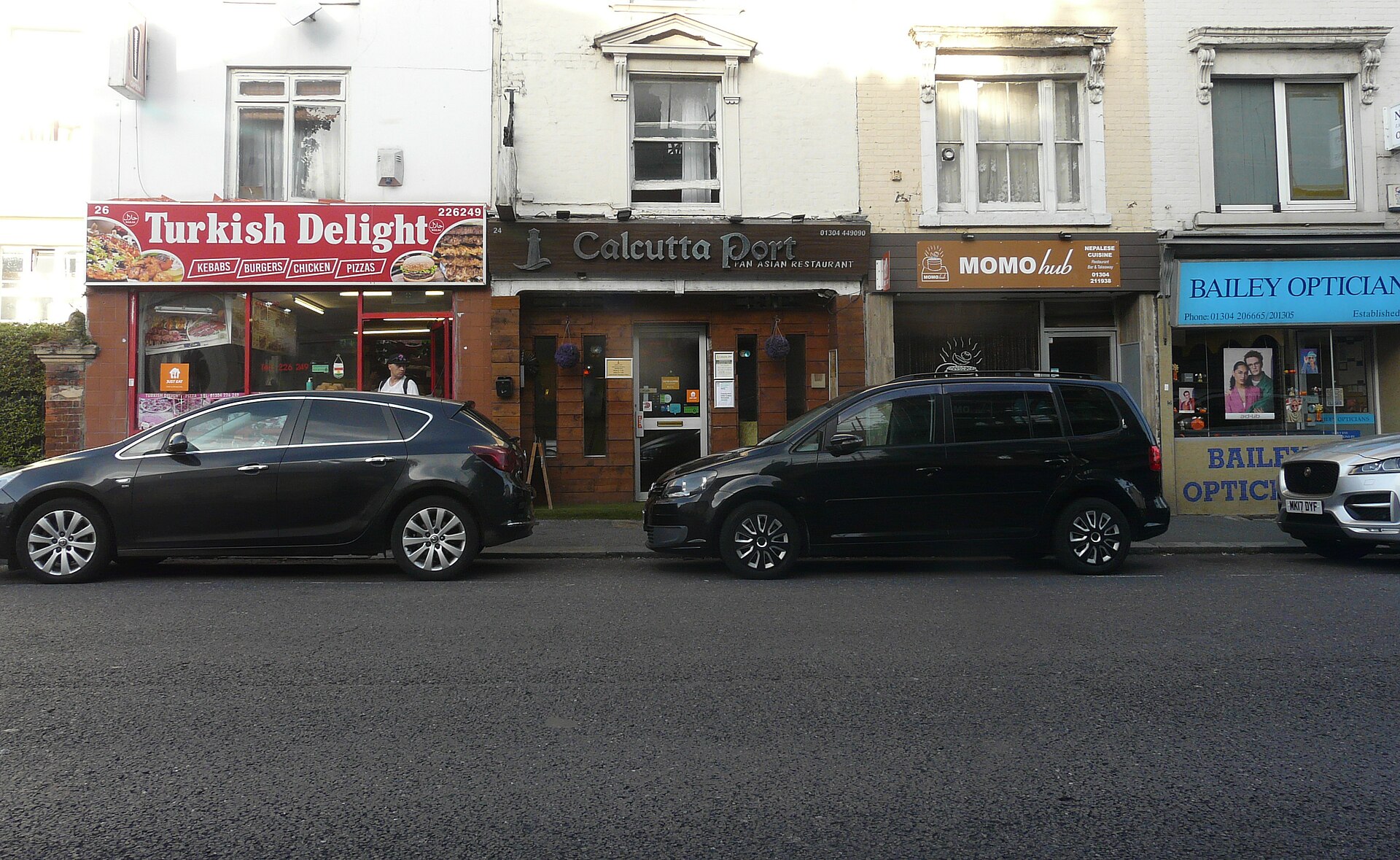
- John Baker. Hero image: Retail outlets, High Street - geograph.org.uk - 7644448.jpg. Wikimedia Commons · CC BY-SA 2.0.Image source ↗
Related Sanctuary capabilities
From analysis to implementation.
Discussion
No approved comments yet.