
Key findings
- Future High Streets Fund locations recovered footfall more strongly than comparable towns, but early evidence on business creation is mixed. Footfall should be treated as a leading indicator of activity, not proof of economic recovery.
- Capital works create value only when access, occupancy, construction mitigation and post-completion stewardship are managed as one delivery system.
- Local Growth Plans, active-travel allocations and high-street initiatives can improve readiness and connectivity, but none substitutes for land control, accountable governance and sustained revenue capacity.
- The most credible town-centre propositions will be few, sequenced and investor-readable—not long lists of attractive but disconnected schemes.
- Performance monitoring should prioritise repeat visits, vacancy duration, business survival, access to everyday destinations and delivery milestones over funding announcements or event-day peaks.
The central issue is operating capability, not the next regeneration announcement
**Assessment horizon: autumn 2026 to autumn 2029.** England’s town centres are no longer being planned around a simple return to retail-led growth. Housing, health and civic services, education, leisure, culture, independent businesses and flexible workspace are increasingly part of the expected mix. Yet diversification alone does not make a centre economically resilient. The more consequential question is whether a place can operate that mix: through construction disruption, changing demand and the routine work of keeping streets accessible, occupied and active.
This matters across the UK’s local-growth debate, even though the evidence and policy mechanisms considered here are principally England-specific. Town centres remain places where small firms meet customers, residents access everyday services and public investment can shape confidence in a wider local economy. If schemes improve appearances but make it harder for firms to trade, or if completed spaces lack maintenance, programming and occupier support, the economic return on capital expenditure will be limited.
The available evidence supports cautious optimism rather than a simple regeneration success story. MHCLG’s final Towns Fund evaluation finds that Future High Streets Fund locations achieved a stronger post-pandemic recovery in footfall than comparable towns. It also identifies visible improvements, accessibility and responsiveness to local needs among the features associated with stronger perceptions of place. ↗ These are important results: making a centre easier and more appealing to use can reduce the practical and perceived cost of visiting it.
But that is not the same as demonstrating sustained firm growth, productivity or local wealth creation. A rise in visits may reflect a completed public-realm scheme, a temporary event, a recovery in consumer confidence or a wider shift in travel patterns. Visitors may also spend elsewhere, make shorter visits than expected or concentrate in a small number of national operators. The relevant policy question is therefore not whether footfall matters. It does. It is whether additional activity is converted into repeat custom, viable occupancy and a more dependable everyday economy.
**Sanctuary interpretation.** The likely regeneration premium over the next three years will attach to what Sanctuary calls **operating districts**: town-centre areas where capital investment is paired with explicit day-to-day stewardship. This includes managing works and communications, helping traders through disruption, bringing vacant units into use, programming public space, maintaining standards and tracking whether initial visits become repeat local trade. Physical projects are the platform; operating capability determines whether the platform produces durable value.
Government’s current high-street interventions, Local Growth Plan process and active-travel allocations offer routes to connect town-centre propositions with wider investment, mobility and growth priorities. ↗ ↗ ↗ The places best placed to use these opportunities will be those with a limited number of mature, sequenced propositions and a credible model for delivery after the funding announcement.
What the evidence establishes—and what it does not
The Towns Fund evaluation provides the strongest basis for this analysis because it goes beyond individual project case studies. It reports that Future High Streets Fund towns reached 97.9% of Q3 2019 monthly footfall by Q3 2025, compared with 91.3% in comparable non-funded towns, and estimates a 6.7% relative footfall effect. ↗ That is a material indication that targeted intervention can be associated with a stronger recovery in town-centre activity.
The methodological limits are equally important. Only schemes completed in time could be included in the quantitative assessment: 14.7% of Town Deal projects and 35.1% of Future High Streets Fund projects. The evaluation reports mixed early evidence on business creation, including a relative decline in business numbers in Future High Streets Fund towns during the delivery period, and judges that longer-term effects require assessment three to five years after project completion. ↗ A robust reading is therefore that capital intervention can improve conditions for recovery, while the evidence is not yet sufficient to claim a durable business-growth effect.
There are plausible reasons for this gap. Construction may suppress passing trade before benefits are felt. Higher visitor numbers may not support independents where the offer is poorly matched to demand, rents are unaffordable or visits are too brief. Property markets, business formation and investment decisions may also respond more slowly than public perceptions of a refreshed centre. These mechanisms do not show that investment has failed; they show why appraisal must distinguish intermediate outcomes from longer-run economic value.
Footfall should also be read in context. The Office for National Statistics publishes retail-footfall measures by location type and region, providing a recurring view of shifts in visitor demand. ↗ The British Retail Consortium’s Footfall Monitor illustrates the sensitivity of short-term visits to weather and weaker consumer conditions. ↗ A single month’s uplift, particularly during an event programme or favourable trading period, is consequently weak evidence of structural recovery.
**Counterargument.** It is reasonable to argue that affordability, flexible use, lease terms and a viable customer market matter more than public realm or active management. They do matter: a well-designed street cannot rescue an unviable business model or an unaffordable unit. But the inverse claim is also incomplete. Landlords and entrepreneurs are less likely to invest where a centre feels hard to reach, unsafe, inactive or poorly managed during works. The practical challenge is to sequence property, movement, public realm and enterprise measures as a single system rather than present them as competing remedies.
How capital investment becomes local economic value
The underlying mechanism is straightforward, but delivery is demanding. Better access, legibility and public space can attract visits. A useful mix of services, shops, culture and leisure gives people reasons to stay, combine trips and return. More dependable activity can then support occupier confidence and investment. At every point, however, an operational failure can break the chain.
A walking and cycling scheme that misses everyday destinations may not create useful town-centre trips. A refurbished square without an agreed maintenance and programming model may lose its initial effect. A major redevelopment that constrains servicing and access without practical trader support can weaken the very independent firms it is intended to help. A mixed-use masterplan without land assembly, a delivery partner or a revenue model remains a proposition rather than an investable scheme.
This makes management capability an economic variable, not an administrative afterthought. The Towns Fund evaluation found that capacity funding was important where local authorities lacked the expertise and resource needed to develop robust plans and business cases. ↗ That need continues after business-case approval. Town centres need named leaders and clear governance capable of coordinating planning, highways, property, culture, transport, landlords, traders and anchor institutions across a multi-year delivery period.
For small and medium-sized enterprises, this is particularly consequential. Smaller firms generally have less capacity to absorb prolonged falls in passing trade, changing access arrangements or uncertain fit-out decisions. They are also often central to the distinctiveness of a high street and to the local circulation of spending. Trader liaison, transparent construction communications, temporary trading opportunities, affordable meanwhile space and workable lease propositions should be regarded as risk controls within a capital programme, not optional embellishments.
The objective is not to force every centre to become a destination-shopping location. For many places, the more resilient proposition will be an everyday economy: health and civic functions, education and employability activity, food, repair, local workspaces, homes, culture and businesses that meet routine needs. A broader base can reduce dependence on discretionary retail demand while giving residents, employers and investors a clearer reason to use the centre regularly.
**Sanctuary recommendation.** Every significant town-centre capital scheme should have a parallel operating plan, costed for the construction period and for at least an initial post-completion phase. It should specify who is accountable for activation, maintenance, occupier engagement and benefits realisation—not merely who is responsible for building the asset.
The indicators that distinguish delivery from announcement activity
Over the next 12 to 36 months, a small set of measures can reveal whether a centre is building durable capability rather than accumulating announcements.
**First, test project readiness.** MHCLG’s Local Growth Plan guidance asks Mayoral Strategic Authorities to identify priority investment opportunities with an investment ask, timetable, planning status, partners and relevant regulatory contingencies. ↗ Applied to town centres, these are more revealing than a newly launched vision. They show whether a proposition can withstand scrutiny from funders, investors and delivery partners. Local authorities outside the direct scope of the guidance can apply the same discipline.
**Second, test disruption and delivery capacity before works begin.** Partners should be able to identify land-control milestones, procurement routes, servicing and access arrangements, trader-engagement plans, accountable leaders and a funded period of post-completion management. Omissions in these areas are not procedural detail. They are predictable sources of delay, avoidable business disruption and weak benefits realisation.
**Third, measure repeat activity rather than event peaks.** Rugby Borough Council reports that its 2026–27 events programme increased average footfall by 10–20% compared with the previous year’s programme, alongside shopfront grants, rates relief and five long-term lets through High Street Rental Auctions. ↗ This is useful evidence of local delivery activity, but it is not a causal evaluation: programming, weather, timing and wider consumer demand may affect the comparison. More meaningful tests are whether ordinary-day footfall rises, activity spreads to adjacent streets, dwell time improves and businesses report stronger repeat trade.
**Fourth, judge access by destinations reached, not infrastructure delivered.** Active-travel allocations for English local transport authorities cover 2026–30 and can support infrastructure, network planning, early design and engagement. ↗ Town-centre schemes should assess whether walking, wheeling and cycling connections improve access to markets, workplaces, schools, health services, libraries and local businesses. Delivery and disabled access, parking needs and interchange with public transport must be resolved rather than treated as late-stage objections.
**Fifth, track occupancy and enterprise health.** Vacancy duration, active frontages, upper-floor reuse, business survival at 12 and 24 months, evening activity and—where data permit—local ownership are more useful than a simple occupied-unit count. Together they indicate whether a centre is developing a broader local economy or simply recycling short-term occupation.
Merton’s work to secure a development partner for Remaking Morden illustrates the difference between aspiration and preparation. The council identifies prior work on land, costs, funding and commercial arrangements for a mixed-use town-centre proposition. ↗ This is not evidence that the scheme will succeed; it is evidence that reducing delivery ambiguity is itself a substantive part of regeneration.
The choice to 2029: integrated renewal or improved places with thin economic returns
The most plausible near-term outcome is uneven progress. A minority of centres will combine visible improvements with credible mixed-use delivery, stronger access and active management. Others will complete worthwhile capital works but struggle to translate them into stable occupancy, repeat demand and enterprise growth because land, revenue budgets or governance remain unresolved.
An upside path is possible where high-street support is locally tailored, active-travel investment connects real destinations and a small number of town-centre opportunities are made legible to investors through clear partnerships, phasing and funding requirements. The crucial condition is that occupier support and activation continue through construction and after completion. In that scenario, later evaluation may begin to show stronger business survival, investment or employment effects alongside improved footfall.
The downside is not necessarily failed construction. It is a centre that looks better but remains economically fragile: works take longer than expected, traders absorb unmanaged disruption, temporary occupation substitutes for a viable lettings strategy and public spaces generate occasional peaks rather than everyday use. Such outcomes are most likely where no organisation has both the mandate and resource to manage the place after the ribbon-cutting.
**Sanctuary recommendations.** Before committing to a flagship scheme, councils, Business Improvement Districts, anchor institutions and enterprise partners should agree an operating-district plan with four linked components:
1. **Movement and dwell:** identify barriers between transport, parking, civic anchors and commercial streets, then prioritise changes that make linked, everyday trips easier.
2. **Occupancy and enterprise:** set out a plan for meanwhile use, affordability, trader support, active frontages and upper-floor activation.
3. **Delivery and stewardship:** establish land, phasing, construction mitigation, governance and the revenue resource required after completion.
4. **Public accountability:** publish baselines and regular reporting for repeat footfall, dwell, vacancy duration, business survival, access to destinations and delivery milestones.
England’s town centres do not need to return to a retail-first model. They need credible operating models that make capital investment useful to residents and viable for firms. The strongest schemes will be those that can demonstrate—not merely promise—that better streets, better access and better management are being converted into an everyday local economy.
Research foundation
References
- Ministry of Housing, Communities and Local Government (2026). Towns Fund Evaluation: final findings – summary for policymakers. GOV.UK.Source ↗
- Ministry of Housing, Communities and Local Government (2026). High streets revived and children given safe places to play. GOV.UK.Source ↗
- Office for National Statistics (2026). UK retail footfall. Office for National Statistics.Source ↗
- British Retail Consortium (2026). Footfall Monitor. British Retail Consortium.Source ↗
- Ministry of Housing, Communities and Local Government (2026). Guidance for Mayoral Strategic Authorities on developing Local Growth Plans. GOV.UK.Source ↗
- Department for Transport and Active Travel England (2026). Active travel local transport authority allocations. GOV.UK.Source ↗
- Rugby Borough Council (2026). Town centre regeneration plans start to deliver. Rugby Borough Council.Source ↗
- Merton Council (2026). Major milestone for Remaking Morden town centre as Merton Council announces plans to secure key development partner. Merton Council Newsroom.Source ↗
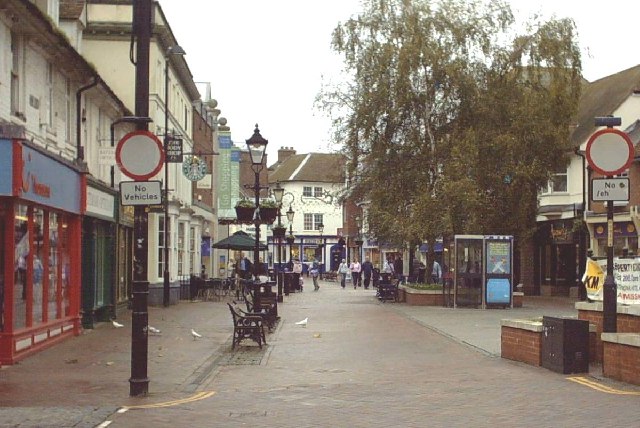
- Adam Colton. Hero image: Ashford Town Centre - Upper High Street - geograph.org.uk - 74845.jpg. Wikimedia Commons · CC BY-SA 2.0.Image source ↗
Related Sanctuary capabilities
From analysis to implementation.
Discussion
No approved comments yet.