
Key findings
- Ofgem reported contracted demand offers of 125GW in June 2025, including at least 80GW associated with data centres. This demonstrates pressure on the connections system, not equivalent operational demand.
- Installed IT load, annual electricity consumption, connection capacity and strategic compute ambitions measure different things. Conflating them creates misleading claims about future electricity demand.
- Connections reform can improve the allocation of scarce capacity, but it cannot eliminate the physical constraints of consents, land access, substations, transformers, cables and specialist delivery capability.
- The strongest near-term projects are likely to be phased developments with a financeable first stage, evidenced customer demand, credible equipment plans and accountable energisation milestones.
- Flexibility and local economic value should be assessed through defined technical, contractual and procurement commitments—not inferred from a campus’s headline capacity.
The queue is a measure of competition, not a 2029 construction pipeline
The UK has a legitimate strategic interest in expanding both digital compute and the electricity networks that support it. But a consequential error is taking hold in discussion of data centres: treating a request for a grid connection, or even a contracted offer, as evidence that an equivalent volume of electricity demand will soon be operating.
That shortcut matters now. It can influence network plans, local authority expectations, supplier investment and training provision years before a site has secured finance, built its first hall or signed customers. It can also produce the opposite mistake: reading a reduction in the queue after reform as evidence that underlying demand has collapsed.
Ofgem reported that contracted demand offers rose from 41GW in November 2024 to 125GW in June 2025, with data-centre projects accounting for at least 80GW. It concluded that the queue materially exceeded capacity expected to be needed by 2030 (Ofgem, 2026) ↗. This is powerful evidence of competition for system access. It is not evidence that 80GW of data-centre load will be operational by 2029, or that every project with an offer will proceed at its requested scale.
A connection offer can have value before a project is ready to build. It may support discussions with landowners, investors or prospective customers. An ultimate-capacity headline can also conceal a far smaller first energised phase, with later expansion dependent on market demand and network delivery. These are ordinary features of large infrastructure development, rather than proof that proposals are necessarily weak.
Nor is the queue meaningless. Where constrained capacity is retained by projects with limited delivery prospects, credible schemes can be delayed and network planning becomes harder. NESO’s connections reforms are intended to prioritise projects that are both ready to progress and strategically aligned (NESO, 2026) ↗. The policy challenge is therefore not to dismiss applications, but to distinguish early commercial interest from deliverable operating demand.
**Sanctuary interpretation.** Queue data should be treated as a measure of system pressure, commercial interest and incentives within the connections regime. It should not be used as a stand-alone forecast of data-centre electricity consumption or completed capacity in 2029.
Four measures are being wrongly treated as interchangeable
Much of the apparent certainty in the data-centre debate comes from combining metrics that answer different questions. The phrase “data-centre demand” may refer to installed IT equipment, annual electricity consumption, capacity sought at a grid connection point, or a national policy ambition. None is a substitute for the others.
| Measure | What it can indicate | What it cannot establish alone |
|---|---|---|
| Installed IT load | Computing-equipment capacity in a defined market segment | Total site demand, annual electricity use, or the timing of expansion |
| Annual electricity consumption | Energy used over a year | Local peak demand, connection requirement, or construction readiness |
| Connection capacity | Capacity requested or offered at a specific location | Whether a project will be financed, completed, or fully utilised |
| Strategic capacity ambition | The capability that policy considers may be needed | A committed, site-specific development pipeline |
DESNZ estimated Great Britain’s colocation data-centre IT load at 1.6GW in autumn 2024. ONS estimated that data centres consumed 4.5TWh of electricity in 2024, up 1.3TWh, or 41%, since 2020 (DESNZ, 2025) ↗ (ONS, 2026) ↗. Together, these findings demonstrate that the sector is material and growing. They do not justify a direct conversion between IT load, annual consumption and connection offers without explicit assumptions about infrastructure overheads, utilisation, operating patterns, facility definitions and phasing.
Scope matters as much as arithmetic. DESNZ’s capacity estimate concerns colocation facilities and excludes enterprise data centres. It also records a highly concentrated installed market: London accounted for 1,048MW of the estimated 1.6GW, compared with 154MW in Wales and 128MW in the South East (DESNZ, 2025) ↗. That is evidence of where capacity was measured in 2024, not a verdict on where future capacity should be built.
The UK Compute Roadmap introduces a fourth category: strategic ambition. It identifies a potential need for at least 6GW of AI-capable data-centre capacity by 2030, including nationally significant facilities of 500MW or more and one exceeding 1GW (DSIT, 2025) ↗. This reinforces the case for planning for substantial future compute infrastructure. It does not show that an equivalent volume of connection requests will become live load at named sites on a fixed timetable.
**Sanctuary recommendation.** Developers, policymakers and commentators should state which measure they are using, its geographic and facility scope, the planned first-stage load, and the assumptions linking IT equipment to total site demand. This is the minimum discipline needed to avoid false precision.
The real test is conversion from offer to sustained operating load
A useful 2029 outlook should focus less on gross queue capacity than on conversion. For a proposed data centre, that conversion has three linked stages.
First is **commercial conversion**: a viable initial phase, credible customer demand and finance. Second is **physical conversion**: land, permissions, substations, reinforcement works, critical equipment and a feasible construction sequence. Third is **operational conversion**: the completed facility must be occupied and used at a level consistent with the capacity reserved.
Connections reform primarily affects allocation at the front of this chain. Readiness and strategic-alignment tests can reduce the ability of underdeveloped schemes to retain scarce capacity and give stronger projects a clearer route to progress (Ofgem, 2026) ↗ (NESO, 2026) ↗. That is necessary, but it is not a complete delivery strategy. A better queue cannot manufacture transformers, secure land rights or expand the pool of specialist engineers and contractors.
The delivery constraints are substantial. Government has said Great Britain needs around twice as much new transmission network by 2030 as was delivered in the previous decade. Its response on network infrastructure identifies consent processes, land access and rights, route development and public legitimacy as material delivery issues (DESNZ, 2026) ↗. Ofgem has separately highlighted international competition and long lead times for transformers and cables, alongside pressure on specialist engineering and delivery capacity (Ofgem, 2026) ↗. RIIO-3 provides a framework for major network investment, but funding decisions cannot themselves guarantee equipment availability, skills or construction capacity (Ofgem, 2025) ↗.
There is also a real policy trade-off. Weak readiness requirements can allow speculative options to occupy constrained capacity. Requirements that are imposed too early or too rigidly, however, can favour large incumbents before smaller developers and new entrants have had time to assemble land, finance and customer commitments.
**Sanctuary interpretation.** The objective should be proportionate evidence at defined delivery gates—not a presumption that either the first applicant or the best-capitalised applicant should prevail. A credible proposal should disclose a minimum viable first phase, evidence of demand and finance, critical dependencies, equipment plans and accountable expansion milestones.
Siting decisions must work for the system and the local economy
Data-centre location is not simply a property or power-price decision. Established clusters offer dense fibre connectivity, proximity to customers, experienced operators and specialist suppliers. Yet those same locations may face acute network constraints or reinforcement schedules that do not fit a developer’s programme. Locations with a credible route to power may, in turn, need greater investment in connectivity, workforce capability and operational support.
The AI Growth Zones policy illustrates this wider calculation. Subject to legislation and qualifying system benefits, eligible projects in Scotland, Cumbria and the North East could receive electricity-cost reductions from April 2027 (DSIT, 2025) ↗. The important implication is not that activity should simply be moved out of London. It is that power availability and connection timing must be assessed alongside fibre, land, construction feasibility, customer access and the depth of local technical capability.
The counterargument deserves weight. Lower electricity costs cannot indefinitely offset weak connectivity, a shallow specialist supplier market or difficulty recruiting experienced operators. Equally, a campus outside an established cluster does not automatically create broad local prosperity if high-value procurement, technical management and operational roles remain elsewhere.
This distinction is particularly important for SMEs, colleges and employability providers. Small firms should not buy equipment or recruit solely because a large campus has been announced. They need a visible work pipeline, accessible procurement routes, suitable contract package sizes and early clarity on technical standards, accreditation and insurance requirements. Training providers need defined occupations, placements and progression routes rather than generic claims about construction jobs.
**Sanctuary recommendation.** A credible local proposition should link an expected energisation date to the reinforcement programme, construction schedule, supplier strategy and skills commitments. Treating energy, planning and local economic development as separate approvals risks backing projects that appear plausible individually but are weak as integrated investments.
Flexibility and local value must be specified rather than presumed
Flexibility can improve the system case for some large loads, but it is not an inherent property of digital infrastructure. Phased energisation, curtailment, workload shifting and storage may reduce demand under defined conditions. A DESNZ-commissioned study also considers circumstances in which digital services could displace more energy-intensive activity and AI-enabled productivity could reduce electricity used per task (Europe Economics, 2026) ↗.
These possibilities should not be confused with a solution to a local network constraint. Networks must accommodate demand at a particular location and time, not annual consumption alone. A more efficient workload may still coincide with a constrained local peak. Curtailment may be commercially or technically infeasible where customers require continuous service, workloads cannot be transferred, storage duration is insufficient, or contracts do not reward interruption.
**Sanctuary recommendation.** Developers seeking recognition for flexibility should state the controllable share of load, response time, duration, control arrangements, customer permissions, financial incentives and exceptions. This makes flexibility an assessable service rather than a claimed attribute, while making clear where reinforcement remains indispensable.
The same discipline applies to local value. Data-centre and network investment can support civil engineering, cabling, switchgear, testing, protection systems, controls and programme management. But construction employment is time-limited, while specialist procurement and high-value operational roles may sit outside the host area. A large connection is not, by itself, an economic-development strategy.
Ofgem’s work on network supply chains points to durable demand for engineering, programme-management and specialist-service capacity across the wider infrastructure pipeline (Ofgem, 2026) ↗ (Ofgem, 2025) ↗. Local-value plans should therefore distinguish temporary construction work from permanent roles, create practical routes for SMEs into procurement, and connect skills provision to adjacent digital, industrial and energy opportunities.
What a credible 2029 proposition should prove
The most plausible near-term outcome is selective acceleration, not mechanical conversion of the queue into operating load. Reform may remove, resize or defer weaker applications while projects with finance, land, customer evidence and a workable system case progress. But a queue can be reformed more quickly than substations can be consented, transformers procured and construction capacity mobilised.
There is a credible upside case: phased campuses align with network development and evidenced demand, enabling meaningful growth in operating capacity. There is also a credible weaker case: a better-quality queue still encounters slow physical delivery or lower utilisation than application volumes imply. These are conditional scenarios, not probability forecasts. The available evidence supports urgency on connections reform and network investment; it does not support a precise forecast of completed UK data-centre capacity by 2029 (Ofgem, 2026) ↗ (NESO, 2026) ↗ (Ofgem, 2025) ↗.
Before public support is committed—or substantial local expectations are created—decision-makers should ask five questions:
1. **Is demand evidenced?** Test customer commitments, financing and the rationale for requested capacity.
2. **Is energisation buildable?** Examine land, permissions, network works, equipment procurement, construction sequencing and accountable milestones.
3. **Does the site fit the system?** Assess local constraints, planned reinforcement and the timing of wider system effects.
4. **Is flexibility enforceable?** Require a technical and contractual account of phasing, curtailment, storage and workload management, including its limits.
5. **What endures after construction?** Identify routes to SME participation, supplier development, employability and adjacent local industries.
Britain does not need less ambition for compute or for electricity networks. It needs a firmer distinction between strategic ambition, applications for access and deliverable operating demand. That distinction is not an argument for delaying viable investment. It is the basis for allocating scarce capacity credibly, planning infrastructure honestly and securing local value that outlasts construction.
Research foundation
References
- Office of Gas and Electricity Markets (2026). Ofgem acts to free up grid capacity by tackling speculative data centre projects. Ofgem.Source ↗
- National Energy System Operator (2026). Connections Reform Results. NESO.Source ↗
- Department for Energy Security and Net Zero (2025). Estimate of Data Centre Capacity: Great Britain 2024. GOV.UK.Source ↗
- Office for National Statistics (2026). Data centres and the UK National Accounts. ONS.Source ↗
- Department for Science, Innovation and Technology (2025). UK Compute Roadmap. GOV.UK.Source ↗
- Europe Economics (2026). Impact of growth of data centres on energy consumption: follow up study. Department for Energy Security and Net Zero.Source ↗
- Department for Science, Innovation and Technology (2025). Delivering AI Growth Zones. GOV.UK.Source ↗
- Department for Energy Security and Net Zero (2026). Electricity network infrastructure: consents, land access and rights — government response. GOV.UK.Source ↗
- Office of Gas and Electricity Markets (2026). Growing Great Britain’s electricity network supply chains: Ofgem position and call for evidence. Ofgem.Source ↗
- Office of Gas and Electricity Markets (2025). RIIO-3 Final Determinations for the Electricity Transmission, Gas Distribution and Gas Transmission sectors. Ofgem.Source ↗
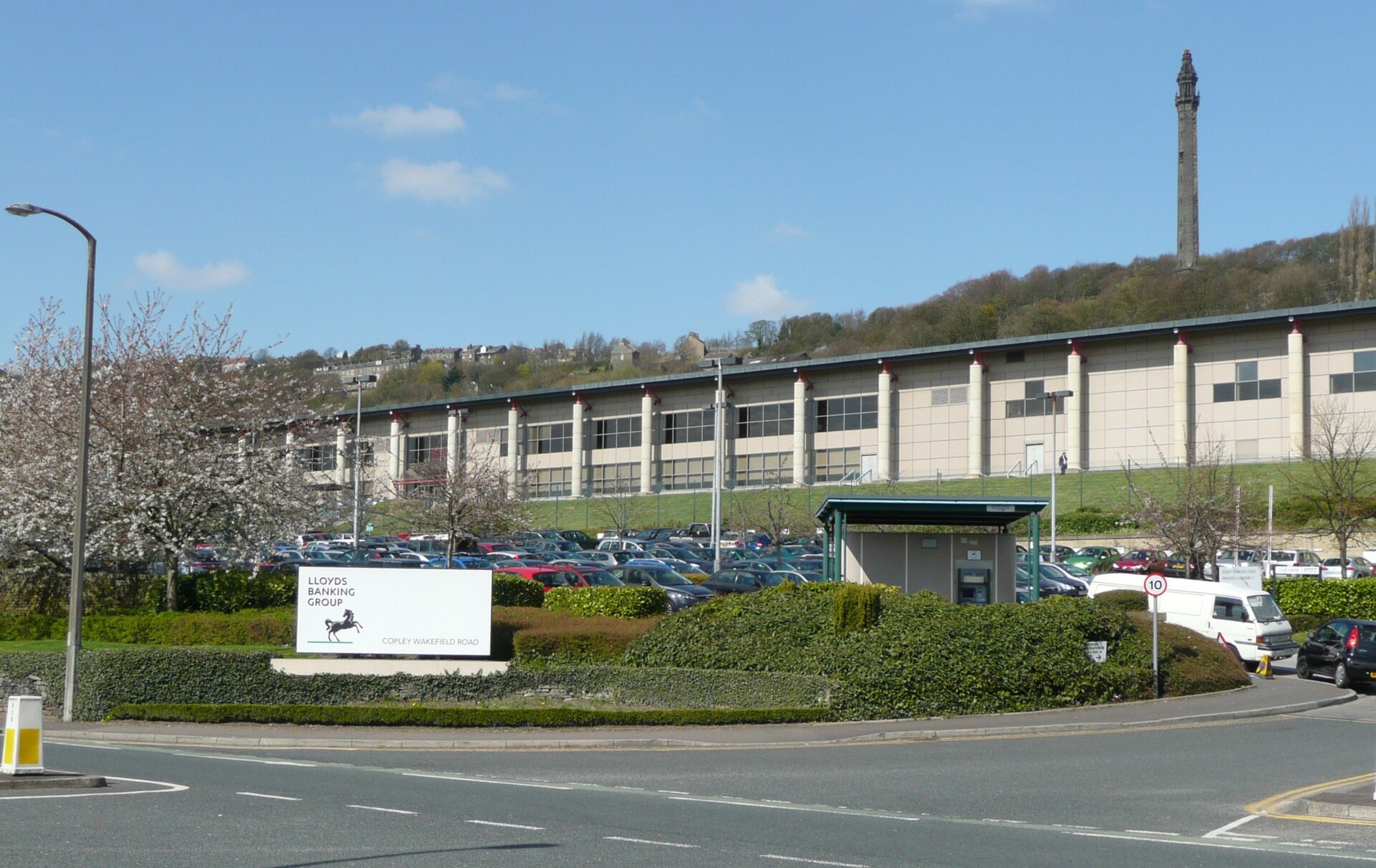
- Humphrey Bolton. Hero image: Copley Data Centre, Wakefield Road - geograph.org.uk - 1835237.jpg. Wikimedia Commons · CC BY-SA 2.0.Image source ↗
Related Sanctuary capabilities
From analysis to implementation.
Discussion
No approved comments yet.